
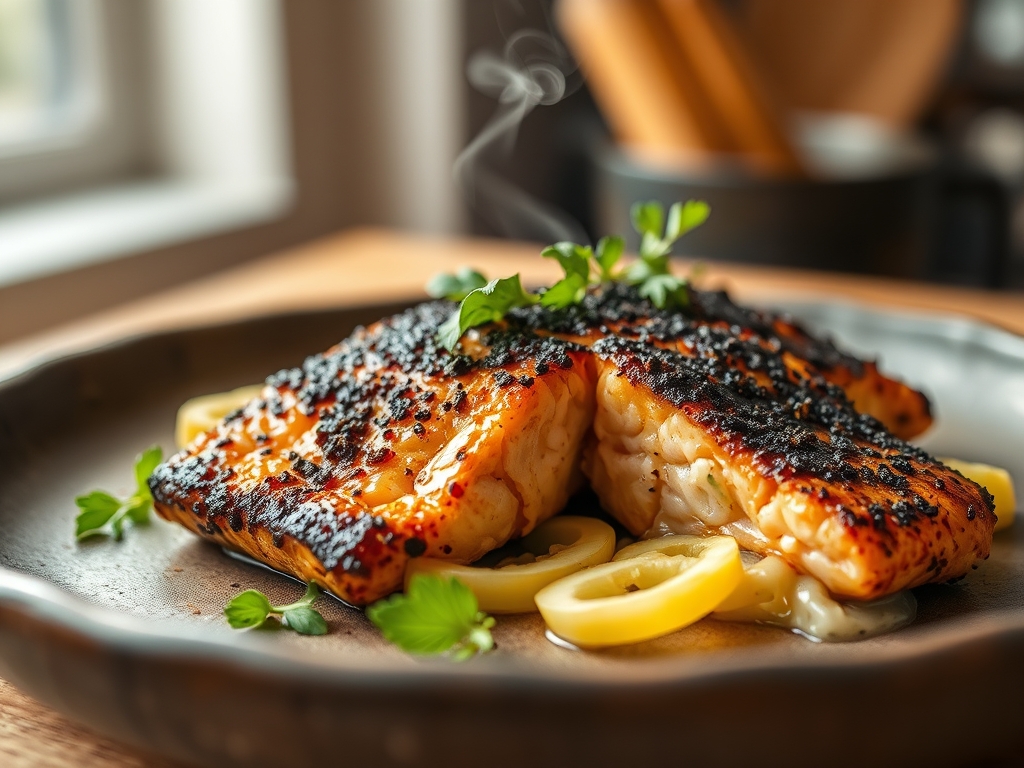
Imagine the scent of smoldering paprika and toasted cumin swirling through your kitchen; it is a heady, piquant aroma that signals something transformative is happening inside your oven. We are moving beyond the realm of basic meal prep and into the territory of high-heat alchemy. When you master baked blackened salmon recipes, you are essentially learning how to manipulate the Maillard reaction to create a shatter-crisp crust that protects a buttery, translucent interior. This is not just dinner; it is a masterclass in texture and temperature control. We want that deep, mahogany char without the bitterness of scorched spices, and we want it delivered with the effortless grace of a professional chef. Most home cooks shy away from blackening because they fear the smoke or the mess, but by shifting the process to the oven, we harness convection to create a uniform sear that is as reliable as it is delicious. Grab your favorite heavy-bottomed skillet and let us get into the grit of how to turn a simple fillet into a restaurant-quality centerpiece that will have your friends begging for your secrets.
The Gathers:
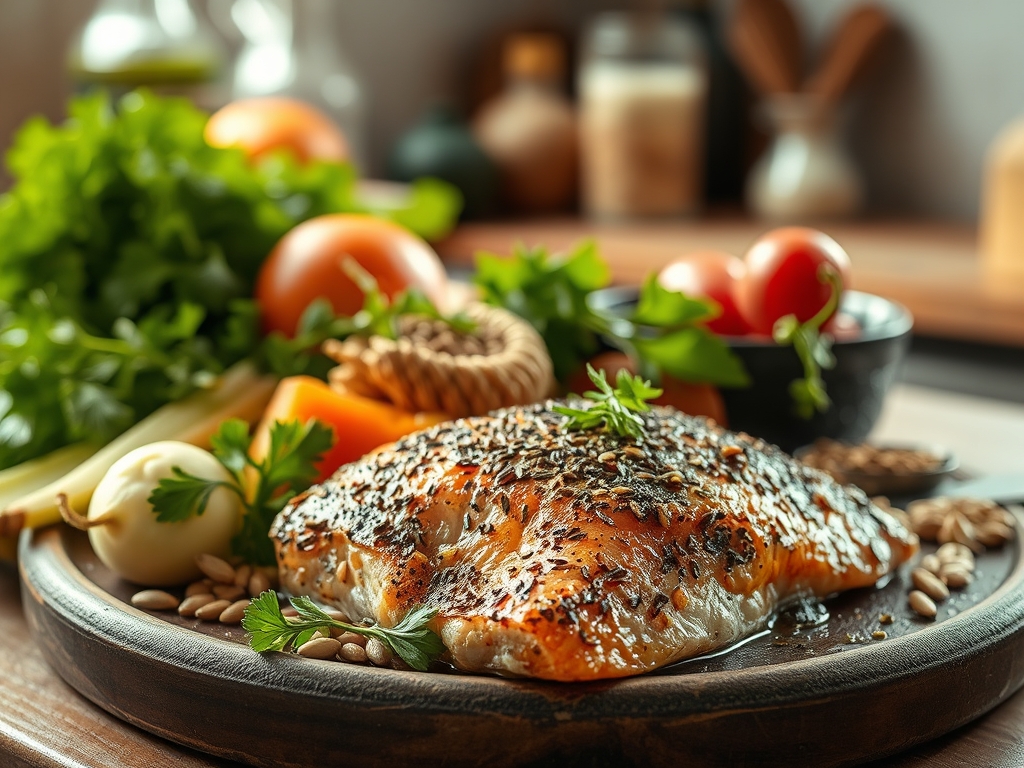
To achieve the perfect crust, your mise-en-place must be precise. Start with high-quality Atlantic or King salmon; look for fat marbling that will render during the bake to keep the proteins succulent. You will need a potent dry rub consisting of smoked paprika, cayenne pepper, onion powder, garlic powder, dried thyme, and oregano. Use a digital scale to ensure your spice ratios are exact, as too much salt can draw out moisture prematurely and ruin the crust.
For the fat component, clarified butter or avocado oil is essential because of their high smoke points. Avoid extra virgin olive oil here; it will break down and turn acrid under the intense heat required for blackening. You will also need a microplane to zest fresh lemon over the finished product, providing a bright, acidic counterpoint to the deep, earthy spices.
Smart Substitutions: If you are watching your sodium, replace half the salt with nutritional yeast to maintain a savory, umami profile. For those who prefer less heat, swap the cayenne for chipotle powder; it offers a smoky depth without the aggressive capsaicin burn. If you lack a cast-iron pan, a heavy-rimmed baking sheet will suffice, though the heat retention will be slightly less efficient.
The Clock
The "Chef's Flow" is all about rhythm and minimizing downtime. Total preparation takes exactly 10 minutes, while the active cooking time spans between 12 and 15 minutes depending on the thickness of your fillets.
- The Temper (5 Minutes): Remove the fish from the refrigerator. Cold protein hits a hot pan and seizes, resulting in uneven cooking.
- The Coat (5 Minutes): While the oven preheats to a blistering 425 degrees Fahrenheit, apply your oil and spice dredge.
- The Sear and Bake (12-15 Minutes): This is the active phase where the spices bloom and the sugars in the paprika caramelize.
- The Rest (3 Minutes): Essential for moisture redistribution.
The Masterclass
1. Temper and Pat Dry
Use a lint-free paper towel to remove every trace of surface moisture from the salmon skin and flesh. Moisture is the enemy of the sear; if the surface is damp, the fish will steam rather than crust.
Pro Tip: This is known as preventing evaporative cooling. If water is present, the energy of the oven goes into boiling that water at 212 degrees rather than browning the fish at 300 degrees plus.
2. The Viscous Bound
Brush each fillet with a thin layer of oil or melted clarified butter. This acts as a glue for your spices and a conductor for heat. Use a silicone pastry brush to ensure even coverage without knocking off the delicate flakes of the fish.
Pro Tip: Fats facilitate lipid-mediated heat transfer, ensuring that the heat from the pan and air reaches the crevices of the meat uniformly.
3. The Heavy Dredge
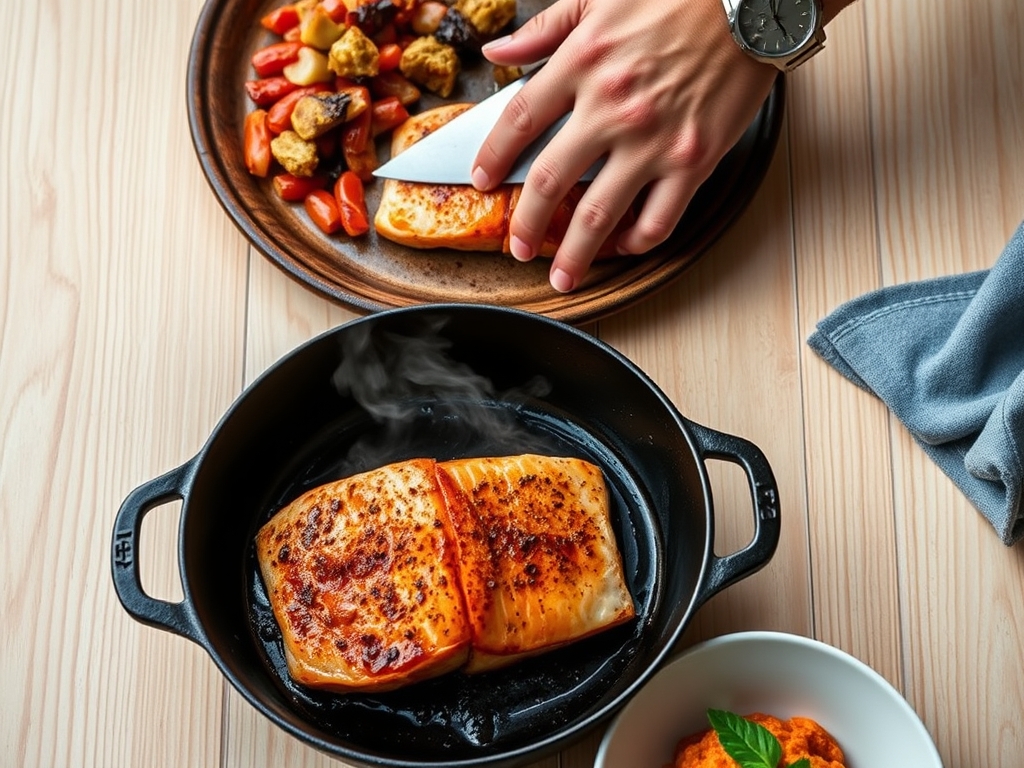
Apply your blackened seasoning generously. You want a literal wall of spices. Press the spices into the flesh using a bench scraper or the flat of your knife to ensure they adhere firmly.
Pro Tip: This layer creates a thermal barrier. The spices take the brunt of the heat, protecting the delicate fats inside the salmon from oxidizing too quickly.
4. The Initial Sear
Place your heavy-bottomed skillet on the stovetop over high heat for two minutes before adding the fish. Sear the flesh side down for just 60 seconds to "set" the spices before transferring the whole pan to the oven.
Pro Tip: This triggers the Maillard reaction instantly, creating complex flavor compounds that cannot be achieved through baking alone.
5. The Convection Bake
Slide the skillet into the center rack of the oven. The ambient heat will cook the fish from the outside in while the pan continues to sear the bottom.
Pro Tip: Monitor the internal temperature with a digital probe thermometer. You are looking for 125 degrees Fahrenheit for medium-rare, as thermal carryover will raise the temperature by another 5 degrees while it rests.
6. The Acidic Finish
Once removed from the oven, immediately hit the fillets with a squeeze of charred lemon and a sprinkle of fresh parsley.
Pro Tip: The acid acts as a palate cleanser, cutting through the dense fats and the heavy spice profile to create a balanced bite.
The Deep Dive
Macro Nutrition: A standard 6-ounce serving of blackened salmon provides roughly 34 grams of high-quality protein and 18 grams of healthy fats, primarily Omega-3 fatty acids. It is naturally low in carbohydrates, making it a powerhouse for metabolic health.
Dietary Swaps:
- Vegan: Use this same spice blend on thick slabs of cauliflower or "steaks" made from firm tofu pressed with a weight.
- Keto/GF: This recipe is inherently keto-friendly and gluten-free, provided your spice mix does not contain anti-caking agents like cornstarch.
The Fix-It:
- Problem: Spices are bitter. Fix: Your heat was too high or your rub had too much dried garlic, which burns fast. Next time, add garlic powder halfway through or lower the rack.
- Problem: Fish is dry. Fix: You missed the carryover window. Pull the fish at 120 degrees next time.
- Problem: Crust fell off. Fix: You didn't pat the fish dry enough or flipped it too early. Let the crust "set" before moving it.
Meal Prep Science: To reheat without losing that "day-one" quality, avoid the microwave. The microwave agitates water molecules, causing the fish to "weep" and turn rubbery. Instead, use a toaster oven at 300 degrees for 5 minutes. This gently re-activates the fats without overcooking the protein core.
The Wrap-Up
Mastering baked blackened salmon recipes is about more than just following a list of ingredients; it is about understanding how heat interacts with protein and spice. By focusing on surface moisture, fat conductivity, and precise timing, you elevate a simple piece of fish into a culinary event. Remember, the kitchen is your laboratory. Do not be afraid of a little smoke or a deep, dark crust; that is where the flavor lives. Now, grab your tongs, fire up that oven, and show that salmon who is boss!
The Kitchen Table
How do I tell if the salmon is done without a thermometer?
Gently press the side of the fillet with a fork. If the flakes separate easily along the white lines of fat (the fascia), the fish is cooked through. If it resists, it needs two more minutes.
Why is my blackened seasoning not turning dark?
True blackening requires high heat and smoked paprika. If your crust looks pale, ensure your oven is fully preheated and that you used enough oil to fry the spices against the skin during the baking process.
Can I use frozen salmon for this recipe?
Yes, but it must be completely thawed and patted dry. Frozen fish often retains extra moisture, so give it an extra ten minutes on the counter over paper towels to ensure the crust adheres properly.
Is blackened salmon supposed to be burnt?
No, blackening is a dark brown mahogany color caused by toasted spices and caramelized proteins. If it tastes like ash or charcoal, the temperature was too high or the oil reached its flash point.
What is the best pan for baking salmon?
A cast-iron skillet is the gold standard. Its high thermal mass ensures the pan stays hot when the cold fish is added, creating a superior crust compared to thin stainless steel or glass dishes.