
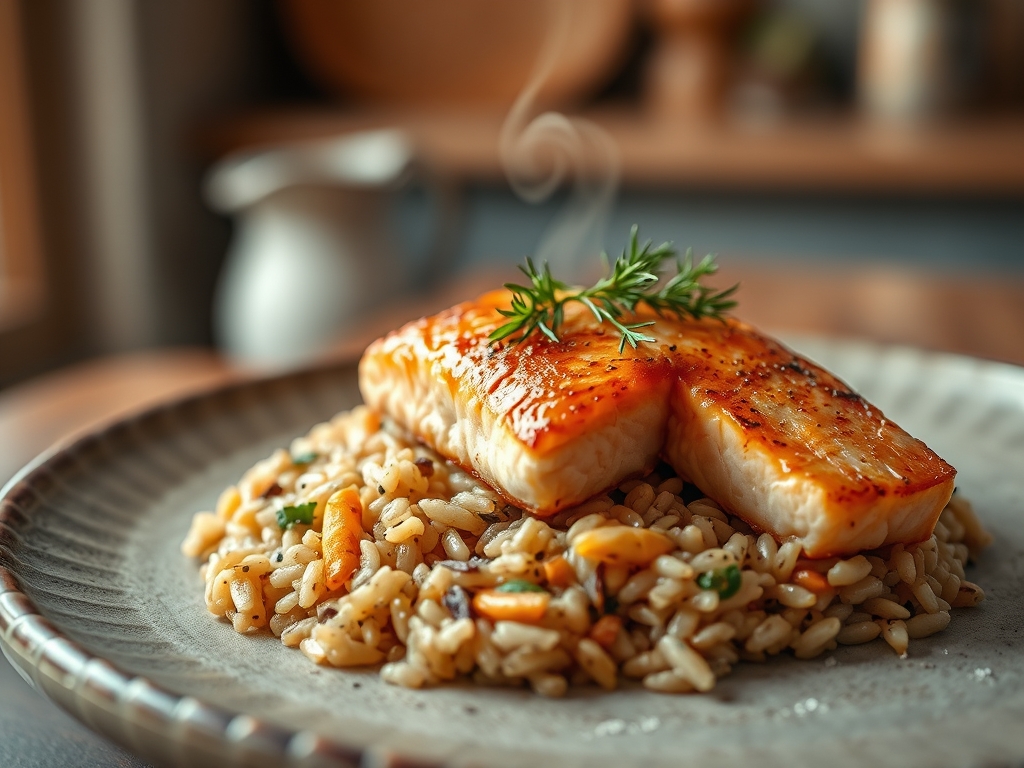
Imagine the sound of a heavy-bottomed skillet meeting the flame. The air begins to change as the nutty, toasted aroma of aquatic grass meets the rich, buttery scent of cold-water fat. If you are looking for the ultimate culinary synergy, these wild rice and salmon recipes offer a masterclass in texture and nutrient density. We are talking about the snappy, obsidian grains of the Great Lakes meeting the flaky, coral-hued perfection of the Pacific. It is a pairing that feels like a mountain lodge retreat on a plate.
Most people treat salmon as a Tuesday night obligation, but when you marry it with the complexity of wild rice, it becomes an event. Wild rice is not actually rice; it is the seed of a marsh grass, which is why it maintains that incredible al dente "pop" even after absorbing a savory broth. When you flake a perfectly seared fillet over a bed of these grains, the rendered fats coat each kernel, creating a mouthfeel that is both luxurious and grounded. Let us dive into the chemistry of why this works and how you can master the art of the perfect sear and the perfect simmer.
The Gathers:
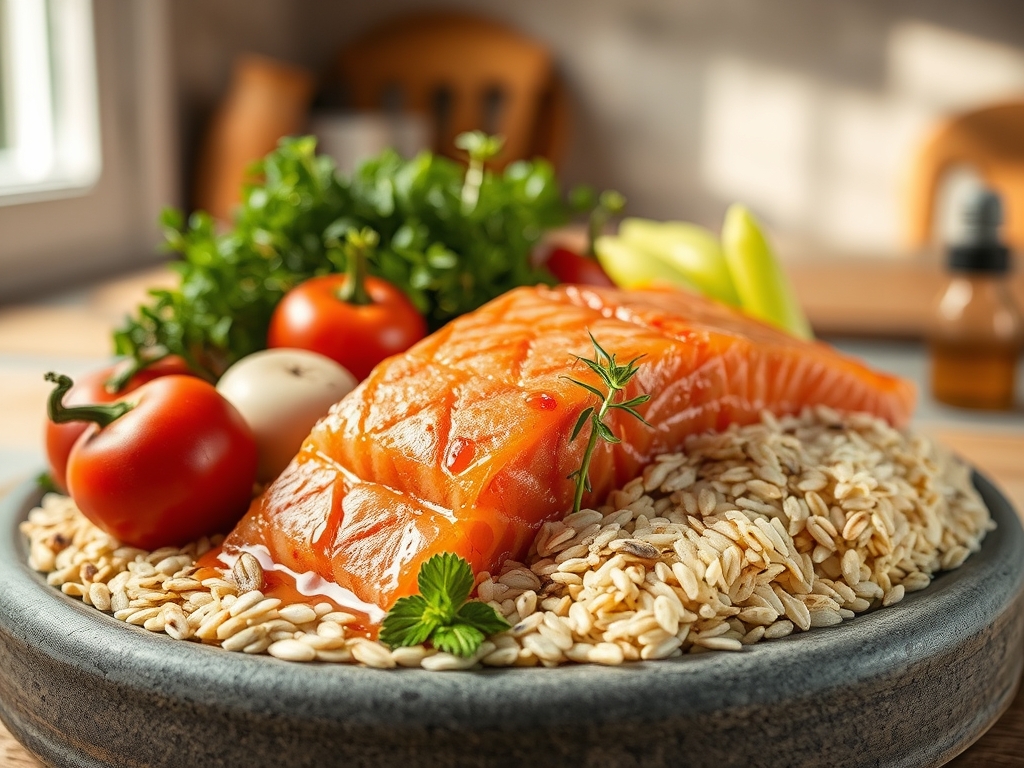
To execute these wild rice and salmon recipes with precision, your mise-en-place must be impeccable. Start with the rice. Look for "Grade A" long-grain wild rice; it has a higher amylose content, which ensures the grains stay distinct rather than turning into a viscous mush. For the salmon, seek out King or Sockeye varieties. These have a higher lipid profile, which allows for a more forgiving window during the searing process.
You will need a high-quality fat source for the pan. Ghee or clarified butter is ideal because the milk solids have been removed, giving it a smoke point of 485 degrees Fahrenheit. This allows you to achieve the Maillard reaction on the fish skin without the bitterness of burnt butter. Gather your aromatics: shallots for a delicate piquancy, fresh thyme to infuse the cooking liquid, and a bright lemon to provide the necessary acid to cut through the richness.
Smart Substitutions: If wild rice is unavailable, black forbidden rice offers a similar anthocyanin profile and earthy flavor. For a lighter version, you can swap the salmon for steelhead trout, which mimics the texture but with a slightly leaner finish. If you are avoiding dairy, an avocado oil spray provides a clean, neutral medium for high-heat searing.
The Clock
Efficiency in the kitchen is all about "Chef's Flow." This is the practice of overlapping tasks so that no component sits cooling while another finishes. Wild rice is the "long pole" in this tent; it requires approximately 45 to 50 minutes to fully hydrate and bloom. Use this time to your advantage.
While the rice simmers, you have a 30-minute window to prep your garnishes and temper your salmon. Bringing the fish to room temperature for 20 minutes before it hits the pan is non-negotiable. This prevents the muscle fibers from seizing, ensuring a tender flake. The actual cook time for the salmon is a mere 6 to 8 minutes. By timing the rest of the fish to coincide with the final "fluffing" of the rice, you ensure that the thermal energy is at its peak when the dish hits the table.
The Masterclass
1. The Grain Hydration
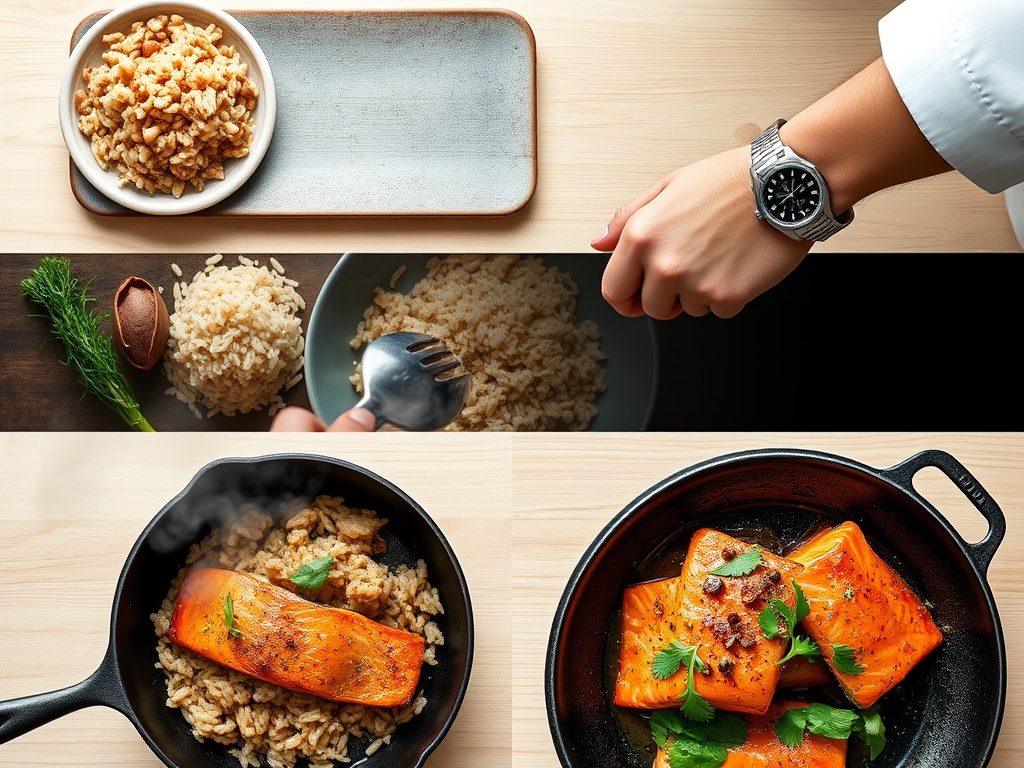
Rinse your wild rice in a fine-mesh sieve until the water runs clear. Place it in a saucier with a three-to-one ratio of fortified bone broth to grain. Bring to a boil, then drop to a whisper of a simmer.
Pro Tip: This is called starch gelatinization. By using a flavorful broth instead of water, you are forcing savory molecules into the center of the grain as it expands.
2. The Salmon Tempering
Pat your salmon fillets bone-dry with a paper towel. Moisture is the enemy of a crisp crust. Season liberally with kosher salt, which draws out surface moisture through osmosis, allowing for a better sear.
Pro Tip: Use a digital scale to ensure your fillets are uniform in weight. This guarantees they all reach the target internal temperature at the exact same moment.
3. The High-Heat Sear
Heat your heavy-bottomed skillet until the oil shimmers. Lay the salmon skin-side down, pressing firmly with a flexible metal spatula for 30 seconds to prevent the skin from curling.
Pro Tip: This prevents the contraction of collagen fibers. Keeping the skin flat ensures maximum surface contact for a glass-like, crispy texture.
4. The Deglaze and Emulsify
Once the salmon is flipped and finished, remove it to a warm plate. Throw a minced shallot into the pan juices, then deglaze with a splash of dry white wine. Use a whisk to pull up the fond.
Pro Tip: This is pan-sauce emulsification. The cold butter added at the end binds with the wine and juices to create a glossy, piquant coating for your rice.
5. The Final Assembly
Fold the bloomed rice into the pan sauce, adding fresh herbs and a zest of lemon using a microplane. Place the salmon on top and serve immediately.
Pro Tip: Allow for thermal carryover. Remove the salmon when it is 5 degrees below your target temp; the internal energy will finish the job while the rice is being plated.
The Deep Dive
From a macro perspective, these wild rice and salmon recipes are a powerhouse. A single serving provides roughly 35 grams of high-quality protein and a significant dose of Omega-3 fatty acids, which are essential for cognitive function. Wild rice adds a surprising amount of plant-based protein and fiber, keeping the glycemic index low.
Dietary Swaps: For a Keto-friendly version, replace the rice with riced cauliflower sautéed in browned butter. For a Vegan twist, swap the salmon for a thick "steak" of roasted hen-of-the-woods mushrooms, which provides a similar umami depth.
The Fix-It:
- Mushy Rice: You likely over-agitated the grains. Next time, do not stir; let the steam do the work. Fix it now by spreading the rice on a sheet tray and blasting it in a 400-degree oven for 5 minutes to dehydrate.
- Stuck Salmon: You tried to flip it too early. The fish will naturally "release" from the pan once the Maillard reaction is complete.
- Bland Base: If the rice tastes flat, it needs acid. Fold in a teaspoon of apple cider vinegar or a squeeze of lime to brighten the earthy notes.
Meal Prep: To reheat without turning the salmon into rubber, use the "low and slow" method. Place the rice and salmon in a glass container with a tablespoon of water, cover tightly, and heat at 250 degrees Fahrenheit. This creates a steam chamber that restores moisture to the proteins.
The Wrap-Up
Mastering wild rice and salmon recipes is about more than just following a list of steps; it is about understanding the physics of the kitchen. You are balancing the slow, steady hydration of a prehistoric grain with the fast, intense sear of a delicate protein. When you get it right, the result is a dish that feels sophisticated yet deeply nourishing. Go grab your favorite skillet, find the freshest catch possible, and turn your kitchen into a sanctuary of flavor. You have the science; now go make the magic.
The Kitchen Table
How do I know when wild rice is finished?
Wild rice is done when the grains "bloom" or curl open to reveal a pale interior. It should be tender but still offer a distinct structural snap when bitten. If it is mushy, it has been overcooked.
Can I use frozen salmon for these recipes?
Yes, provided you thaw it slowly in the refrigerator. Use paper towels to remove every trace of excess moisture before searing. Frozen salmon often contains more surface water, which can interfere with achieving a crisp skin.
Why is my salmon skin not crispy?
The pan likely was not hot enough, or the skin was damp. Ensure the oil is shimmering and use a spatula to press the fish flat against the cooking surface for the first thirty seconds to ensure even contact.
Is wild rice better than brown rice?
Wild rice contains more protein and fewer calories than brown rice. It also boasts a higher concentration of antioxidants. From a culinary standpoint, its unique texture and smoky flavor profile offer more complexity in savory pairings.