
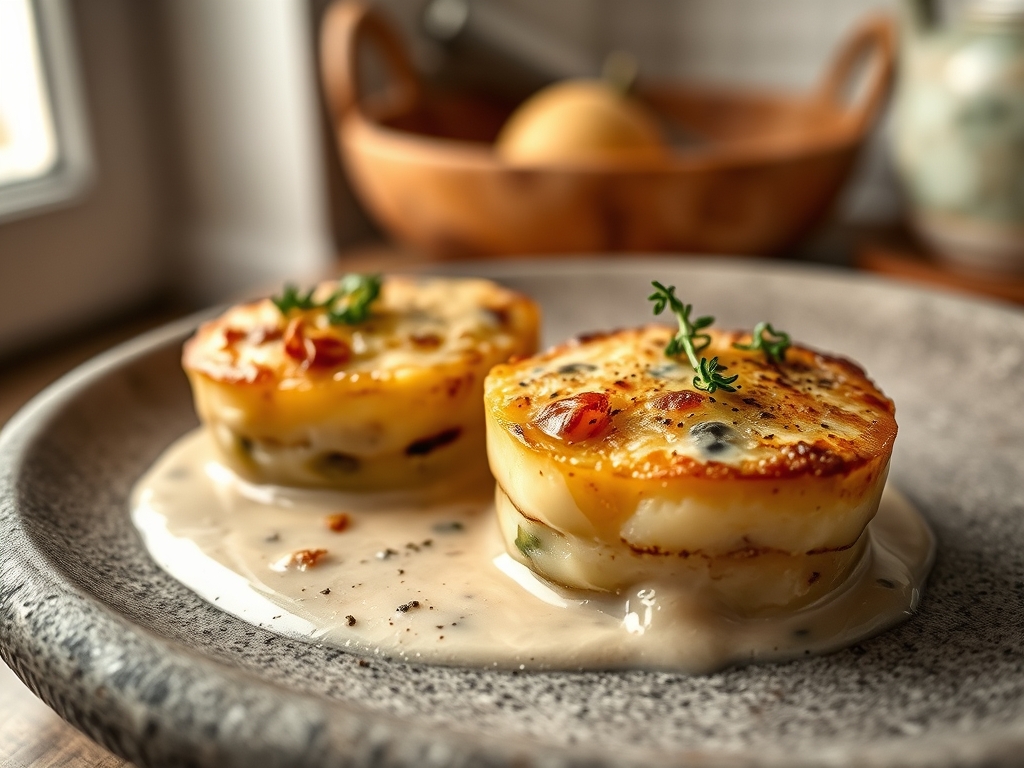
Imagine a kitchen filled with the scent of earthy thyme and bubbling cream; it is the ultimate olfactory embrace. When you master scalloped potato recipes with cream of mushroom soup, you are not just making a side dish. You are engineering a masterpiece of starch and silk that defines comfort food for the modern palate.
There is a specific magic that happens when thin discs of Yukon Gold potatoes meet the concentrated umami of a mushroom base. It is a dance of textures where the potato edges crisp into golden lace while the centers remain buttery and tender. This is the dish that wins every holiday dinner and turns a Tuesday night into a celebration. We are moving beyond the basic casserole and diving into the molecular mechanics of the perfect bake. Grab your favorite apron and a glass of something crisp; we are about to transform a few humble tubers into a culinary event that your friends will be begging you to replicate.
The Gathers:
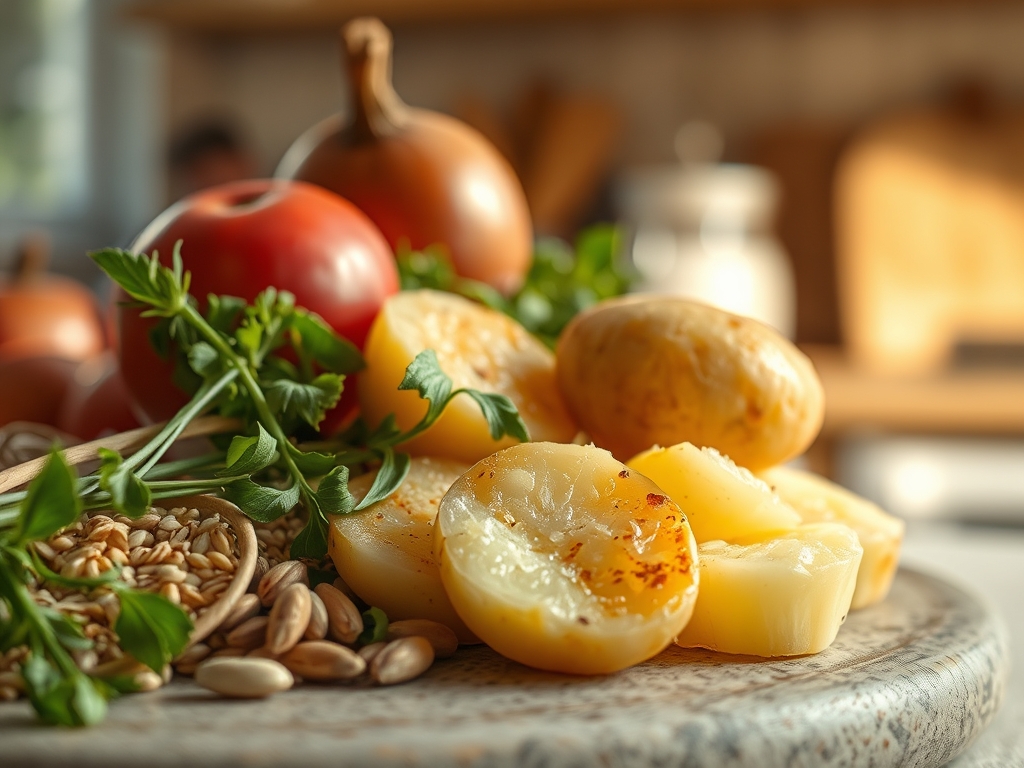
To achieve a restaurant-grade result, your mise-en-place must be precise. We start with five pounds of Yukon Gold potatoes. I prefer these over Russets because their medium starch content and high moisture levels create a creamy mouthfeel without falling apart into mush. You will also need two cans of high-quality condensed cream of mushroom soup; look for brands that list real cream and porcini bits.
For the aromatics, gather three cloves of garlic to be processed through a microplane for maximum surface area and flavor infusion. You will need one cup of whole milk and half a cup of heavy cream to adjust the viscous nature of the soup. For the "piquant" kick, fetch four ounces of sharp white cheddar and a teaspoon of fresh thyme leaves.
Smart Substitutions: If you want to elevate the umami, swap half the milk for a splash of dry sherry to deglaze the palate. If you find yourself without Yukon Golds, Red Bliss potatoes work well, though they require a slightly longer bake time due to their waxy structure. Always use a digital scale to ensure your potato weight is accurate; consistency is the secret to even cooking.
The Clock:
Mastering the "Chef's Flow" is about managing your thermal energy. Total preparation time is approximately 25 minutes, while the oven residency takes about 75 minutes.
The first 15 minutes are dedicated to the "Prep Sprint." This involves slicing the potatoes and whisking the sauce. The following 10 minutes are the "Assembly Phase," where you layer with intention. The "Active Bake" lasts 60 minutes under foil to trap steam, followed by a 15-minute "Gilding Phase" where the foil is removed to trigger the Maillard reaction on the top layer. Finally, the "Resting Phase" of 10 minutes is non-negotiable. This allows the starches to reabsorb the liquid, ensuring your slices do not slide apart when served.
The Masterclass:
1. Precision Slicing
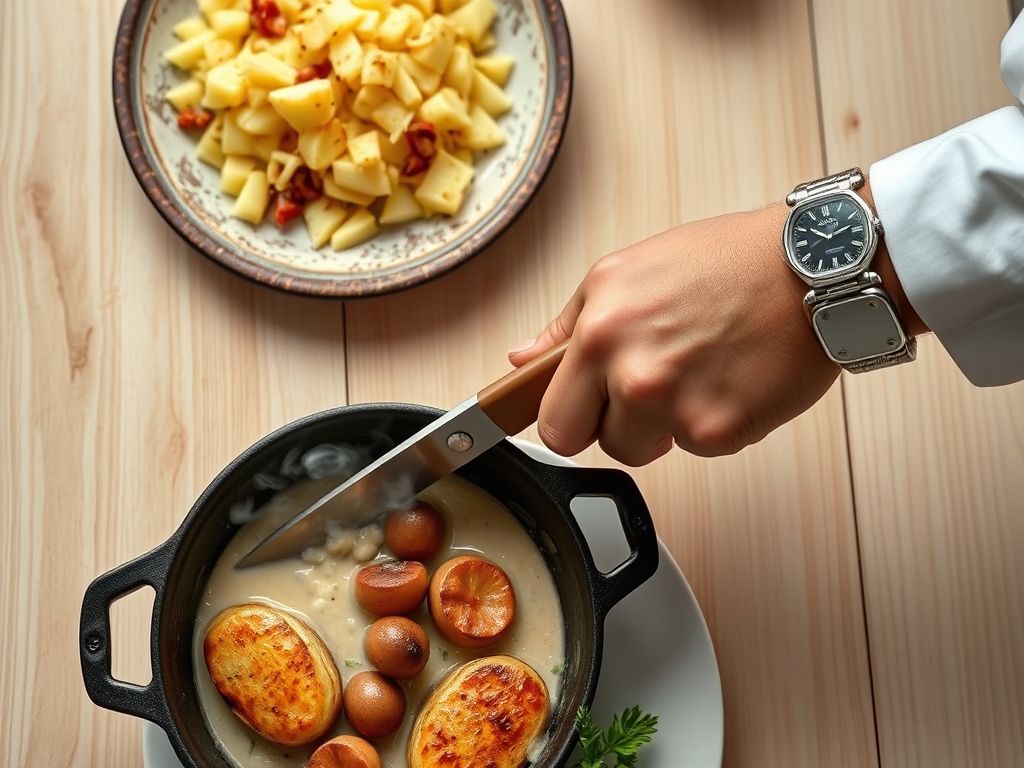
Use a mandoline or a very sharp chef's knife to slice your potatoes into 1/8-inch rounds. Consistency here is the difference between a uniform bite and a crunchy surprise. Keep the slices in a bowl of cold water as you work to prevent enzymatic browning, which occurs when oxygen hits the cut cells.
Pro Tip: The water bath also removes excess surface starch. This prevents the sauce from becoming overly gummy or "gloopy" during the long bake.
2. The Sauce Emulsion
In a saucier or large mixing bowl, whisk together the mushroom soup, milk, cream, and garlic. Use a balloon whisk to aerate the mixture slightly, ensuring the condensed soup is fully integrated into the dairy. This creates a stable emulsion that won't break under high heat.
Pro Tip: Adding a pinch of nutmeg here enhances the earthy mushroom notes. Nutmeg contains myristicin, which chemically bridges the gap between dairy fats and vegetable starches.
3. The Shingled Layering
Grease a heavy-bottomed ceramic baking dish. Arrange a third of the potatoes in overlapping rows. Season each layer with salt and pepper from a height to ensure even distribution. Pour a third of the sauce over the top, using a silicone spatula to spread it to the edges.
Pro Tip: Overlapping the potatoes (shingling) creates small pockets for the sauce to settle. This ensures every millimeter of potato is hydrated by the mushroom essence.
4. The Steam Shield
Cover the dish tightly with aluminum foil. This creates a pressurized steam environment. The moisture from the potatoes is trapped, forcing the heat into the center of the dense stack. Bake at 375 degrees Fahrenheit for 60 minutes.
Pro Tip: This stage relies on conduction. The heat moves from the dish walls through the liquid. If the foil isn't tight, you lose the moisture needed to soften the potato cellulose.
5. The Golden Finish
Remove the foil and sprinkle the sharp cheddar and thyme over the top. Return to the oven for 15 minutes. The cheese will render its fats and the proteins will brown, creating a savory crust.
Pro Tip: Watch for "thermal carryover." The internal temperature will continue to rise about 5 to 10 degrees after you pull it from the oven. Don't wait for it to look dry; pull it when it is still slightly jiggly.
The Deep Dive:
Let's talk numbers and nuances. A standard serving of these potatoes is roughly 320 calories, providing a solid dose of potassium and Vitamin C.
Dietary Swaps: To make this Vegan, use a coconut-milk-based mushroom soup and a cashew-based cream. For Keto enthusiasts, swap the potatoes for sliced cauliflower florets or daikon radish, though you must reduce the liquid by 30 percent as these vegetables release more water. For Gluten-Free needs, simply ensure your canned soup is certified GF, as many use flour as a thickener.
The Fix-It:
- Curdled Sauce: This happens if the oven is too hot. Fix it by whisking a tablespoon of warm heavy cream into the edges of the dish as it rests.
- Crunchy Potatoes: You likely sliced them too thick or didn't seal the foil. Fix it by adding a splash of milk and returning to the oven covered for 15 minutes.
- Greasy Top: This occurs if using low-quality cheese. Blot the surface gently with a paper towel and finish with a dusting of fresh parsley to absorb excess oil.
Meal Prep: These are actually better the next day. To reheat, avoid the microwave. Place a portion in a small oven-safe dish with a teaspoon of water, cover with foil, and bake at 350 degrees. This restores the capillary action within the potato layers, making them creamy again.
The Wrap-Up:
There you have it; the definitive guide to scalloped potato recipes with cream of mushroom soup. By understanding the relationship between starch, steam, and fat, you have elevated a pantry staple into a gourmet side dish. Remember to let the dish rest before you dive in with your serving spoon. The wait is the hardest part, but the reward is a perfectly set, velvet-textured masterpiece that proves science is the most delicious ingredient in your kitchen. Go forth and feast!
The Kitchen Table:
Why are my scalloped potatoes still hard?
The potatoes were likely sliced too thick or the baking dish wasn't sealed tightly enough. Without enough trapped steam, the potato cellulose cannot break down. Ensure slices are 1/8-inch and the foil creates a vacuum-like seal during the first hour.
Can I use milk instead of heavy cream?
Yes, but the sauce will be less stable. Heavy cream contains more fat, which prevents the sauce from "breaking" or curdling at high temperatures. If using only milk, whisk in a teaspoon of cornstarch to help maintain the emulsion.
Should I peel the potatoes first?
For the most refined texture, yes. Yukon Gold skins are thin, but peeling allows the sauce to bond directly with the potato starch. This results in a more cohesive, "melt-in-your-mouth" consistency that defines high-end scalloped potato recipes with cream of mushroom soup.
How do I prevent the cheese from burning?
Only add the cheese during the last 15 minutes of baking. If you add it at the beginning, the proteins will overcook and become oily or bitter before the potatoes are tender. Use the "Gilding Phase" for the perfect melt.