
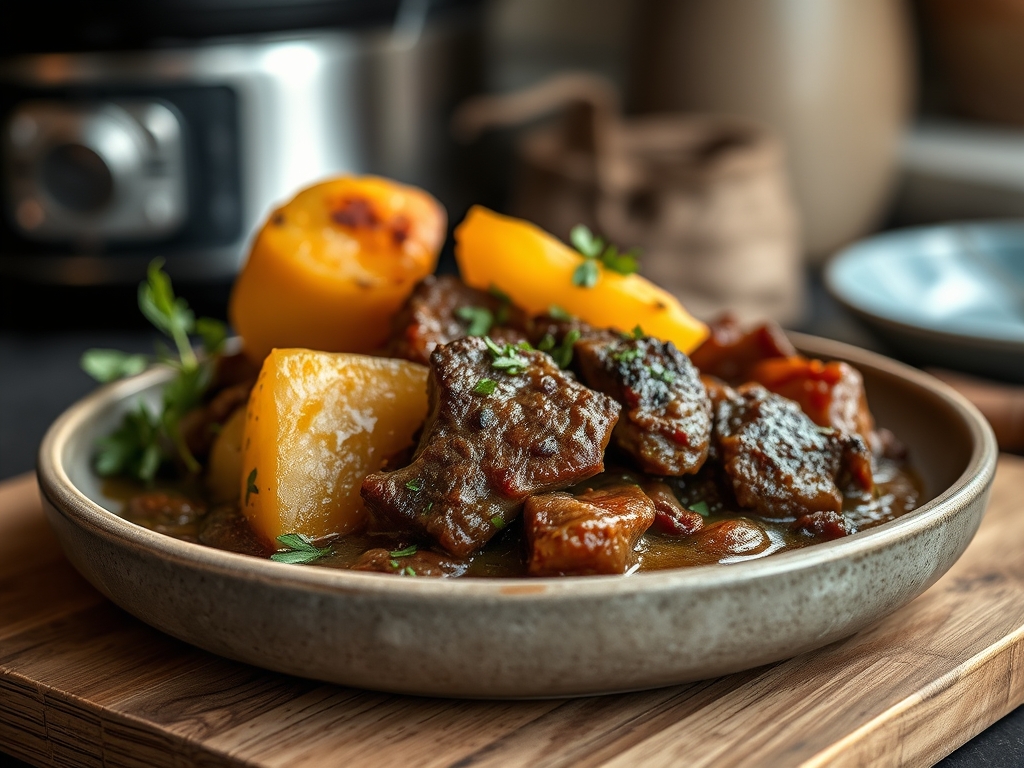
Imagine the scent of toasted peppercorns and rendered fat swirling through your kitchen at 4:00 PM while you have barely lifted a finger. That is the magic of slow cooker beef and potato recipes. It is the ultimate culinary hug; a synergy of collagen-rich protein and starchy comfort that transforms a humble countertop appliance into a high-end French bistro.
The Gathers:
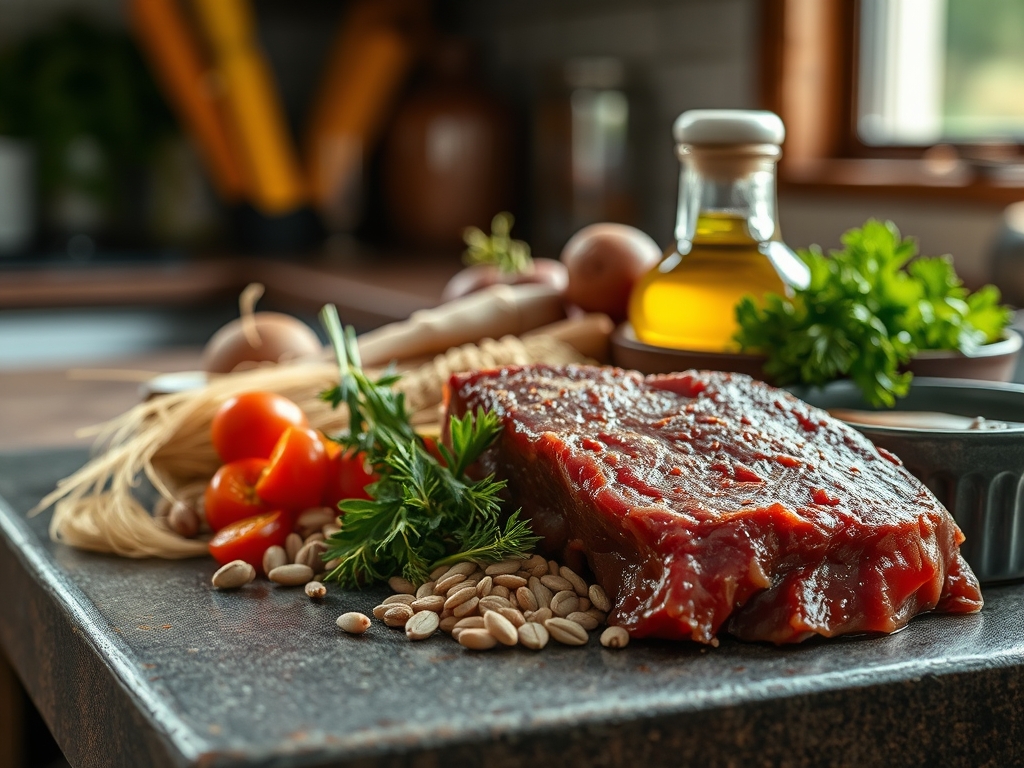
To master slow cooker beef and potato recipes, your mise-en-place must be intentional. We are not just tossing things in a pot; we are building a foundation of flavor. Start with a high-quality chuck roast or brisket. These cuts are loaded with connective tissue, specifically collagen, which breaks down into silky gelatin over several hours. For the potatoes, reach for low-moisture varieties like Russets if you want them to thicken the sauce, or waxy Yukon Golds if you prefer they hold their structural integrity against the heat.
Your aromatics are equally vital. Use a microplane to grate fresh garlic and ginger, ensuring they melt into the liquid rather than remaining as bitter chunks. You will also need a high-smoke-point oil like avocado or grapeseed for the initial sear in a heavy-bottomed skillet.
Smart Substitutions:
If you are out of red wine for deglazing, use a splash of balsamic vinegar mixed with beef bone broth to provide that essential piquant acidity. Instead of cornstarch for thickening, try a beurre manie (equal parts softened butter and flour) whisked in at the end for a more viscous, glossy finish. If you need a night off from peeling, baby red potatoes are your best friend; their thin skins add a lovely rustic texture without the labor.
The Clock
Efficiency in the kitchen is about the Chef's Flow. Expect about 20 to 30 minutes of active prep time. This involves the "sear and deglaze" phase, which is non-negotiable for professional results. Once the lid is closed, the slow cooker takes over for 4 to 6 hours on high or 8 to 10 hours on low. The low and slow approach is mathematically superior for tough cuts; it allows the internal temperature to rise gradually, preventing the muscle fibers from seizing and becoming "woody" or dry.
The Masterclass:
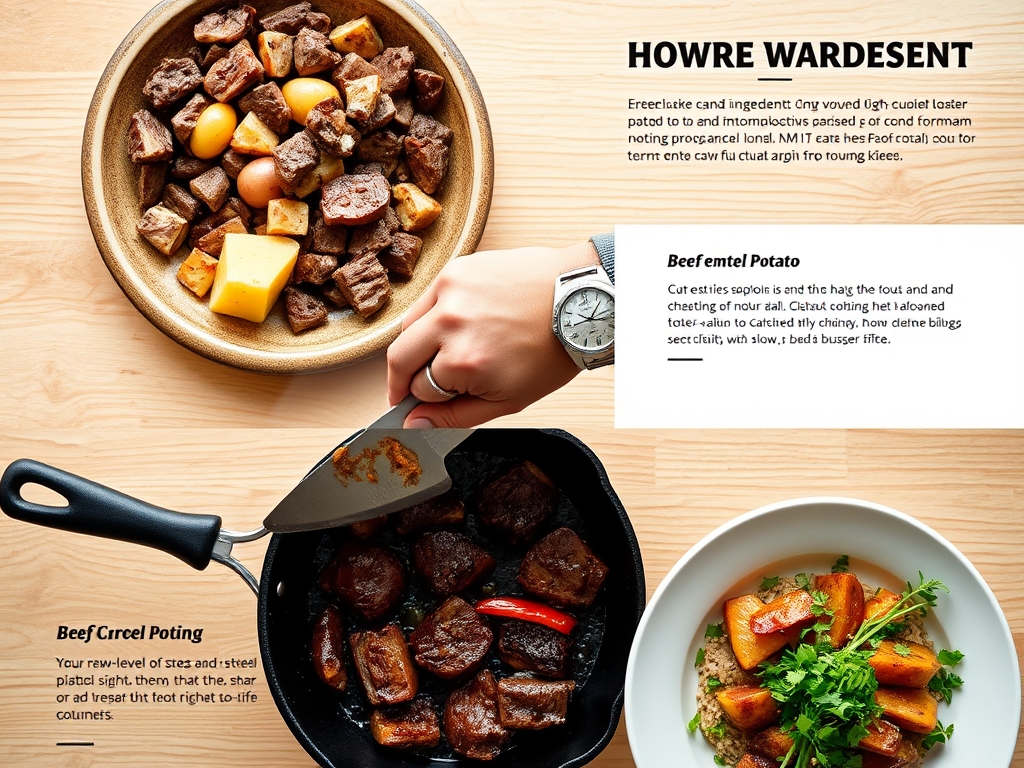
1. The Maillard Sear
Before the beef ever touches the slow cooker, pat it dry with paper towels. Use a digital scale to portion your meat, then sear it in a smoking hot skillet until a deep brown crust forms. Use tongs to turn the meat, ensuring every surface is caramelized.
Pro Tip: This is the Maillard Reaction. By browning the meat first, you create hundreds of new flavor compounds that a slow cooker cannot produce on its own due to the presence of steam and lower temperatures.
2. Deglazing the Fond
Once the meat is removed, you will see brown bits stuck to the pan. This is "fond." Pour in a splash of liquid and use a bench scraper or wooden spoon to lift those bits.
Pro Tip: Deglazing captures concentrated umami. If you skip this, you are essentially throwing away the "soul" of your slow cooker beef and potato recipes.
3. Layering for Thermal Efficiency
Place your hard root vegetables, like carrots and potatoes, at the very bottom of the ceramic insert. Place the seared meat on top, then pour your deglazed liquid over everything.
Pro Tip: The heating element in most slow cookers is located at the bottom and sides. Root vegetables have a higher density and take longer to soften than meat, so they need the most direct heat contact.
4. The Gentle Braise
Set your timer and resist the urge to peek. Every time you lift the lid, you lose significant heat and moisture, which can add 20 minutes to your total cook time.
Pro Tip: This stage involves hydrolysis. The water in the pot reacts with the collagen in the beef, turning it into gelatin. This is why the meat eventually becomes "fork-tender" rather than just falling apart into dry strings.
5. The Final Emulsification
Ten minutes before serving, check the consistency of your sauce. If it is too thin, use a saucier to reduce some of the liquid on the stove, or stir in a slurry.
Pro Tip: Achieving a viscous sauce is about the balance of fats and starches. If the sauce looks broken (oily), a quick whisking motion will help aerate and re-emulsify the fats into the liquid.
The Deep Dive:
From a nutritional standpoint, these meals are powerhouses. A standard serving provides roughly 35g of protein and a healthy dose of potassium from the potatoes. However, the caloric density can climb quickly depending on the fat content of your beef.
Dietary Swaps:
For a Keto version, swap the potatoes for cauliflower florets or radishes; they mimic the texture of potatoes surprisingly well when braised. For a Vegan alternative, use thick chunks of portobello mushrooms and "meaty" soy curls, substituting the beef broth with a rich mushroom dashi. All these recipes are naturally Gluten-Free if you thicken with arrowroot powder instead of flour.
The Fix-It:
- The Meat is Tough: You likely haven't cooked it long enough. If it is still rubbery, the collagen hasn't melted. Give it another hour.
- The Sauce is Bland: It needs acid. Add a teaspoon of apple cider vinegar or a squeeze of lemon to brighten the heavy fats.
- Potatoes are Mushy: You likely used a baking potato (Russet) and cooked it too long. Use a waxy Yukon Gold next time, or cut the potatoes into larger 2-inch chunks.
Meal Prep & Reheating:
Slow cooker meals actually taste better on day two. This is because the aromatics continue to infuse the liquid even after the heat is off. To reheat, avoid the microwave, which can make beef "rubbery" due to uneven molecular agitation. Instead, use a small pot on the stove over medium-low heat to preserve the delicate texture of the potatoes.
The Wrap-Up:
Mastering slow cooker beef and potato recipes is about more than just convenience; it is about understanding the chemistry of time and temperature. By focusing on the sear, the deglaze, and the proper selection of tubers, you transform a basic "set it and forget it" meal into a gourmet experience. Whether you are feeding a crowd or prepping for a busy week, these techniques ensure every bite is rich, balanced, and technically perfect. Now, go grab your favorite heavy-bottomed skillet and get that sear started!
The Kitchen Table:
Can I put frozen beef in the slow cooker?
No, it is a safety risk. Frozen meat stays in the "danger zone" for bacterial growth too long. Always thaw your beef completely in the refrigerator before adding it to the slow cooker to ensure even, safe heat distribution.
Why do my potatoes always turn gray?
Potatoes oxidize when exposed to air. To prevent this, keep your potatoes submerged in cold water until the exact moment you are ready to sear your meat and layer the pot. Ensure they are fully covered by liquid during the cook.
What is the best beef cut for slow cooking?
Chuck roast is the undisputed champion. It contains the perfect ratio of intramuscular fat and connective tissue. As the collagen breaks down into gelatin, it bastes the meat from the inside out, ensuring a succulent, moist result every time.
How do I make the sauce thicker without flour?
You can blend a cup of the cooked potatoes and stir them back into the liquid. The released starches act as a natural thickener. Alternatively, use a cornstarch or arrowroot slurry for a glossy, translucent finish that is completely gluten-free.