
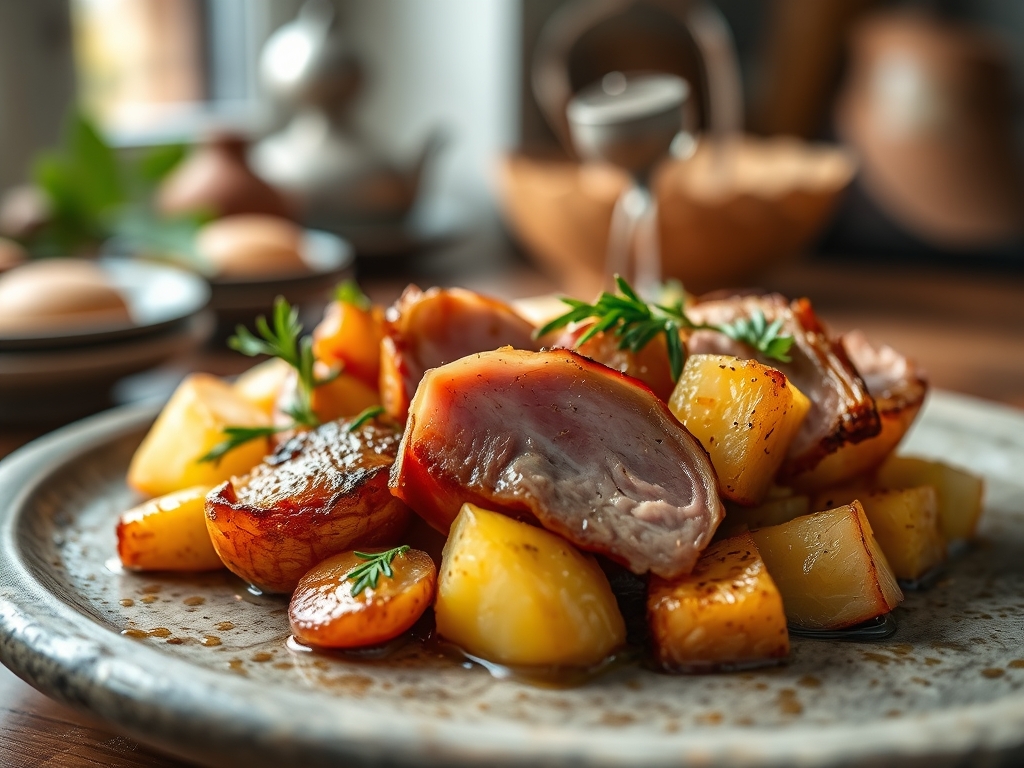
Imagine walking into your kitchen after a long day and being greeted by the scent of smoky salt and earthy starch. It is the ultimate olfactory hug. These slow cooker ham and potato recipes are more than just convenience; they are a masterclass in low and slow flavor development that turns humble pantry staples into a five star velvet masterpiece.
There is a specific kind of magic that happens when a ceramic crockpot mimics the gentle heat of a professional French sous-vide. We are talking about potatoes that hold their shape but melt on the tongue; paired with ham that has surrendered its salt to create a rich, savory broth. Whether you are looking for a thick chowder or a rustic hash, these eight variations provide a foundation for effortless, high density nutrition that satisfies the soul and the science of satiety.
The Gathers:
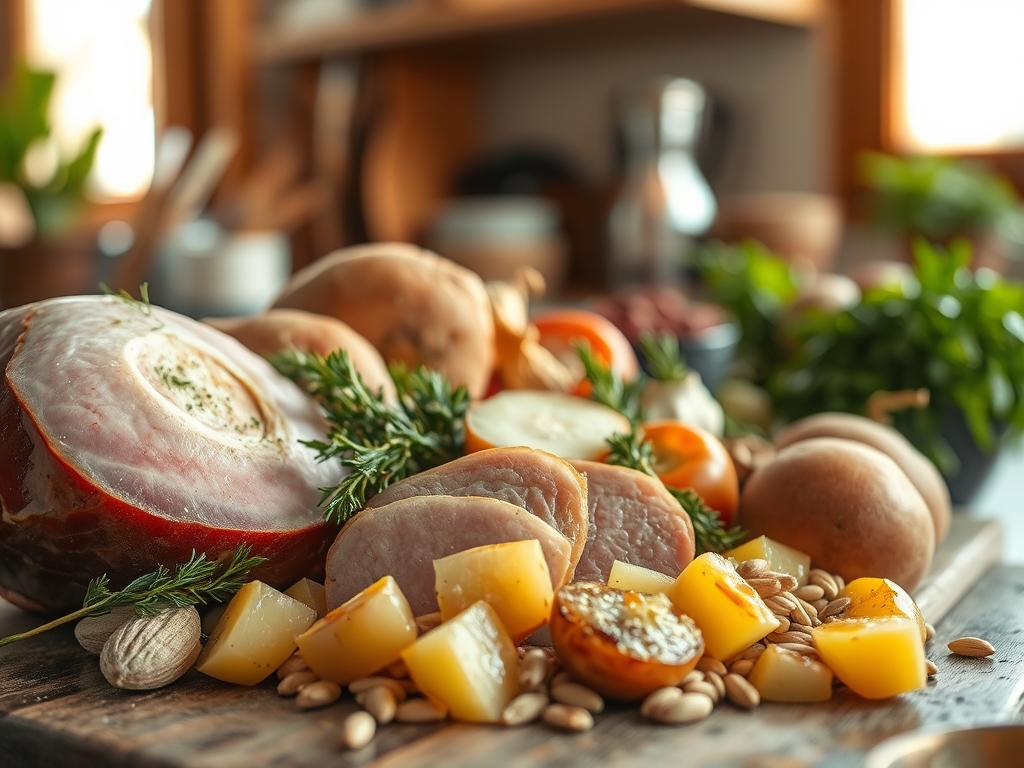
To achieve the perfect texture, your mise-en-place must be precise. Start with a waxy potato like a Yukon Gold or Red Bliss. These varieties contain less starch and more moisture than a Russet; this prevents them from disintegrating into a grainy mush during an eight hour cook cycle. Use a digital scale to ensure your ratios are exact. You will need high quality cured ham, ideally bone-in for the added collagen, which creates a viscous mouthfeel in the final sauce.
For the aromatics, reach for leeks instead of white onions to provide a more nuanced, floral sweetness. You will also need heavy cream or a high fat coconut milk to emulsify the cooking liquid at the end. Do not forget the piquant elements: a dash of Dijon mustard or a microplaned clove of garlic will cut through the heavy fats.
Smart Substitutions: If you are avoiding pork, smoked turkey thighs offer a similar depth of flavor. For a dairy free version, use a saucier to whisk together a slurry of almond milk and arrowroot powder before tempering it into the slow cooker. This ensures the sauce remains stable and does not break under high heat.
The Clock:
Mastering the "Chef's Flow" is about front loading your labor so the machine can do the heavy lifting. Expect a prep time of 20 minutes and a cook time of 4 to 8 hours depending on your heat setting.
The flow begins with the "Hard Prep": peeling, dicing, and weighing. Next comes the "Sear Phase," where you briefly use a heavy-bottomed skillet to brown the ham. This is not for cooking, but for flavor. Finally, the "Set and Forget" phase allows the low thermal energy to break down pectin in the vegetables. If you are in a rush, the high setting works, but the low setting allows for better infusion of the herbs into the potato cell walls.
The Masterclass:
1. The Maillard Foundation
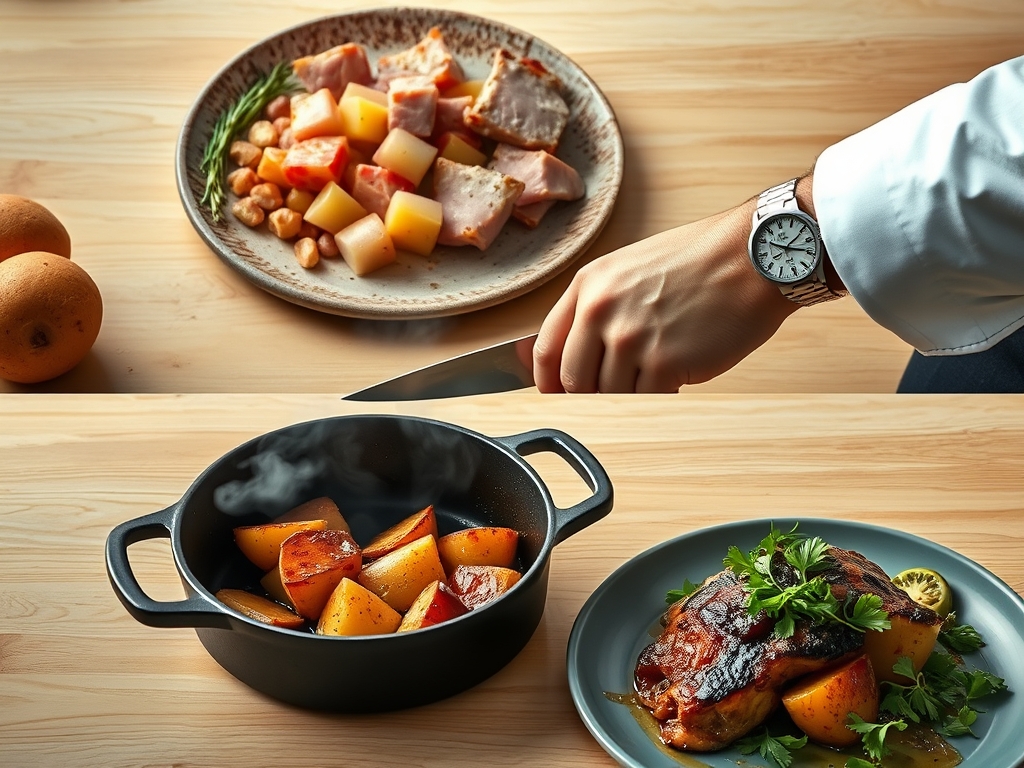
Begin by dicing your ham into uniform half inch cubes using a sharp chef's knife. Use a heavy-bottomed skillet to sear the ham over medium high heat until the edges are crispy.
Pro Tip: This creates the Maillard reaction, a chemical reaction between amino acids and reducing sugars that gives browned food its distinctive flavor. Without this step, your ham will taste boiled rather than roasted.
2. The Vegetable Layering
Place your sliced potatoes at the bottom of the slow cooker. Use a bench scraper to easily transfer your chopped aromatics like celery, carrots, and leeks on top of the potatoes.
Pro Tip: Potatoes take the longest to soften due to their dense starch structure. Placing them closest to the heating element ensures even thermal conduction throughout the vessel.
3. The Liquid Infusion
Pour in your chicken or vegetable stock until the ingredients are just submerged. Add a bay leaf and a sprig of fresh thyme. Do not add salt yet; the ham will render its own salt into the liquid as it cooks.
Pro Tip: This is known as osmotic pressure. The salt moves from the high concentration in the ham to the lower concentration in the potatoes, seasoning the dish from the inside out.
4. The Low and Slow Simmer
Cover the pot and set it to low for 7 hours. Resist the urge to lift the lid. Every time you open the cooker, you lose significant heat and moisture, which can add 20 minutes to your total cook time.
Pro Tip: Maintaining a constant temperature is vital for gelatinization, where starch granules swell and burst to naturally thicken the surrounding liquid.
5. The Final Emulsification
Thirty minutes before serving, whisk in your cream or thickening agent. Use a silicone spatula to gently fold the mixture so you do not break the softened potatoes.
Pro Tip: This step prevents the dairy from curdling. By adding it at the end, you avoid the denaturation of milk proteins that occurs during prolonged exposure to high heat.
The Deep Dive:
From a nutritional standpoint, these slow cooker ham and potato recipes are powerhouses of potassium and lean protein. A standard serving contains roughly 350 calories with a balanced macro profile of 25g carbohydrates, 15g fat, and 20g protein.
Dietary Swaps: For a Keto version, swap the potatoes for cauliflower florets and reduce the cook time to 4 hours to avoid mushiness. For a Vegan profile, use smoked tofu and vegetable bouillon, adding a teaspoon of liquid smoke to mimic the ham's profile.
The Fix-It:
- Too Salty: If the ham was over-cured, drop a raw, peeled potato into the pot for the last 30 minutes to absorb excess sodium.
- Too Thin: Use an immersion blender to pulse about 10 percent of the soup. This releases starches that act as a natural thickener.
- Potatoes are Crunchy: This usually means your liquid was too acidic. Add a pinch of baking soda to neutralize the pH and help the cell walls break down.
Meal Prep: To maintain "day-one" quality, reheat your portions on the stovetop in a small saucier over low heat. Add a splash of broth to rehydrate the starches, as potatoes tend to absorb liquid while sitting in the fridge.
The Wrap-Up:
There you have it; a sophisticated approach to the most comforting meal in your repertoire. These slow cooker ham and potato recipes prove that you do not need to stand over a stove for hours to achieve professional results. By understanding the chemistry of the Maillard reaction and the importance of potato selection, you have turned a simple crockpot meal into a culinary event. Now, grab your favorite bowl, a crusty piece of sourdough, and enjoy the fruits of your very minimal labor.
The Kitchen Table:
Can I use frozen potatoes for these recipes?
Yes, but reduce the cooking time by one hour. Frozen potatoes are often blanched, meaning the starch is already partially cooked. Ensure they are fully thawed and drained to prevent excess water from thinning your sauce.
How do I prevent the ham from becoming tough?
Always cut the ham into uniform cubes and submerge them in liquid. The moist heat environment of the slow cooker prevents the proteins from tightening and drying out, keeping the meat tender and succulent.
What is the best way to thicken the broth without flour?
Mashing a portion of the cooked potatoes directly into the liquid is the most effective gluten free method. The released starches create a natural, creamy thickness without altering the flavor profile of the dish.
Can I add fresh herbs at the beginning?
Woody herbs like rosemary or thyme are fine to add early. However, delicate herbs like parsley or chives should be added just before serving to preserve their bright color and volatile oils.