
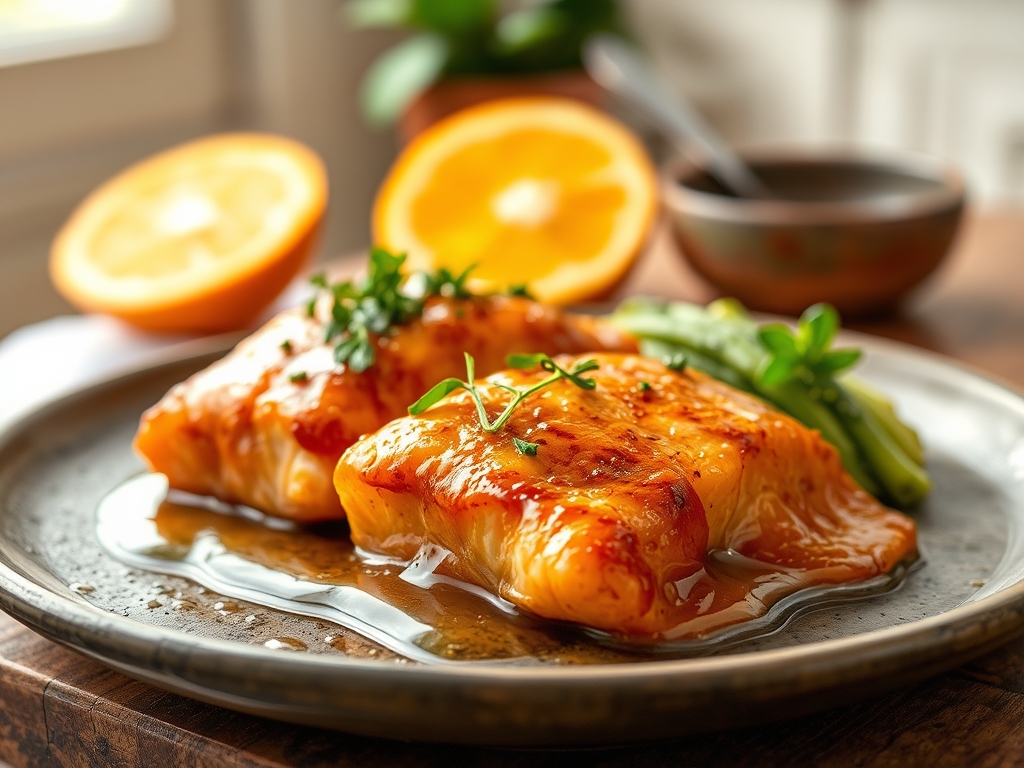
Picture a heavy-bottomed skillet resting on a blue flame; the air is thick with the scent of citrus oils and the sharp, salty promise of soy. You are about to master orange glazed salmon recipes that transcend the typical weeknight dinner. We are chasing that perfect, glass-like finish that shatters under a fork to reveal buttery, translucent flakes of pink gold.
The secret to a world-class glaze is not just sugar; it is the molecular marriage of acidity and heat. When you reduce fresh juice, you are concentrating the fructose and glucose molecules to create a viscous syrup that clings to the protein. This is the intersection of high-end culinary styling and home-cooked comfort. Whether you are hosting a gallery opening or just feeding your favorite person, these seven variations on the theme will ensure your kitchen smells like a five-star bistro. We are looking for that specific piquant bite that only comes from zest and a touch of heat.
The Gathers:
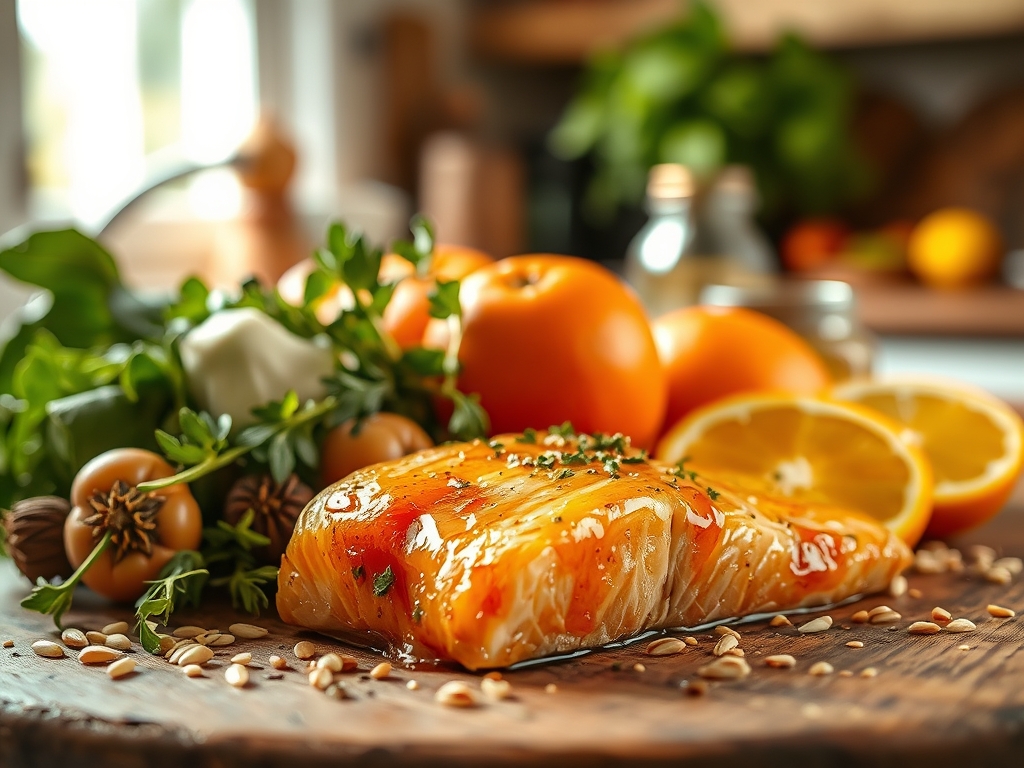
To execute these orange glazed salmon recipes with precision, your mise-en-place must be flawless. Start with six-ounce fillets of Atlantic or King salmon. Look for deep pigmentation and firm flesh that bounces back when pressed. You will need a high-quality microplane to harvest the zest without hitting the bitter white pith. The zest contains essential oils like limonene, which provide the aromatic "high notes" that juice alone cannot achieve.
For the base, gather fresh Cara Cara or Valencia oranges; their high sugar content facilitates better caramelization. You will also need a bottle of low-sodium tamari or soy sauce to provide the umami backbone. A thumb of fresh ginger, finely grated, adds a spicy depth. If you want to elevate the texture, keep a small bowl of toasted sesame seeds and thinly sliced scallions nearby.
Smart Substitutions: If you are out of fresh oranges, a high-quality marmalade can act as a shortcut, though you must adjust the salt to balance the extra sugar. For a soy-free version, coconut aminos offer a similar depth with a slightly sweeter profile. If you prefer a kick, swap the ginger for a dollop of gochujang to introduce a fermented, smoky heat that plays beautifully with the citrus.
The Clock
Efficiency in the kitchen is about "Chef's Flow," the art of overlapping tasks so no heat is wasted. Prep time for these orange glazed salmon recipes is a swift fifteen minutes. This includes your knife work and whisking the glaze in a small saucier. The actual cook time is even faster; usually eight to ten minutes depending on the thickness of the cut.
The flow begins with tempering your fish. Never put cold salmon into a hot pan, as the muscle fibers will seize and push out the moisture, leaving you with dry protein. While the fish rests at room temperature for ten minutes, you reduce your glaze. By the time the skillet is screaming hot, your sauce is thick enough to coat the back of a spoon. Total time from fridge to table is roughly twenty-five minutes.
The Masterclass
1. Temper and Pat Dry
Remove the salmon from the refrigerator and use a paper towel to remove every trace of surface moisture. Moisture is the enemy of the Maillard reaction. If the skin is damp, it will steam rather than crisp.
Pro Tip: This is known as the Leidenfrost effect. By removing surface water, you allow the proteins to bond directly with the hot oil, creating a golden-brown crust rather than a gray, boiled texture.
2. The Initial Sear
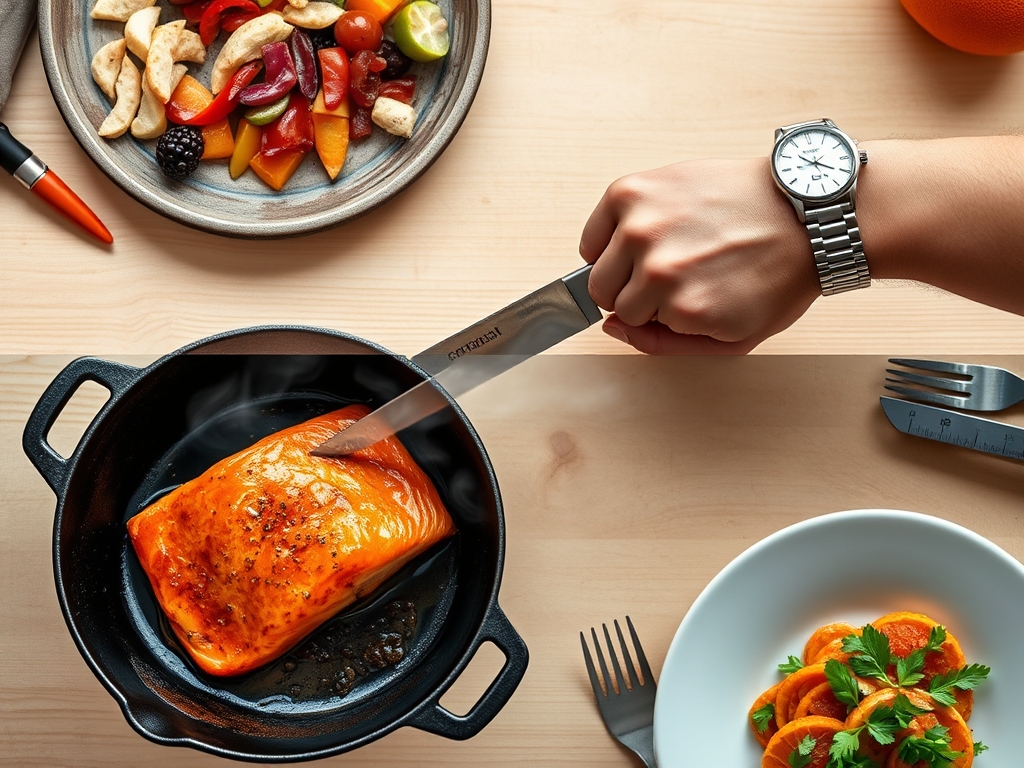
Heat a heavy-bottomed skillet over medium-high heat with a high-smoke-point oil like avocado or grapeseed. Place the salmon skin-side down. Use your tongs to press the fillet firmly against the pan for the first thirty seconds to prevent the skin from curling.
Pro Tip: Pressing the fish ensures even heat distribution. The skin acts as an insulator, protecting the delicate flesh from overcooking while it renders its own fat into a crispy substrate.
3. Deglaze and Infuse
Once the skin is shatter-crisp, flip the fish briefly to kiss the top side with heat, then pour your orange mixture into the pan. Use a wooden spoon to scrape up any browned bits on the bottom of the pan.
Pro Tip: This process is called deglazing. Those browned bits, or "fond," are concentrated pockets of flavor that will emulsify into your glaze, adding complexity and depth to the citrus profile.
4. Baste and Glaze
Lower the heat and use a large spoon to continuously pour the bubbling sauce over the fillets. This is called "arroser." The sauce will thicken rapidly as the water evaporates, leaving behind a concentrated lacquer.
Pro Tip: Continuous basting utilizes thermal carryover. The hot glaze cooks the top of the fish gently without the need for direct flame, keeping the interior medium-rare and succulent.
The Deep Dive
From a macro perspective, orange glazed salmon recipes are a nutritional powerhouse. A single serving provides roughly 35 grams of high-quality protein and a significant dose of Omega-3 fatty acids, which are essential for brain health. The orange glaze adds a hit of Vitamin C and antioxidants, though the sugar content should be monitored if you are following a strict protocol.
For dietary swaps, Keto followers can replace the honey or sugar in the glaze with a monk fruit sweetener and use xantham gum as a thickener. Vegans can apply this exact glaze technique to thick slabs of "tofu steaks" or roasted cauliflower wedges. If you are Gluten-Free, ensure your soy sauce is replaced with tamari.
The Fix-It: If your glaze is too thin, whisk in a cornstarch slurry (one teaspoon starch to one teaspoon water) and simmer for sixty seconds. If the glaze tastes too sweet, add a splash of rice vinegar or a squeeze of lime to provide an acidic counterpoint. If the salmon skin is sticking, it means you tried to flip it too early; wait for the protein to naturally release from the pan.
For meal prep, the science of reheating is vital. To maintain "day-one" quality, avoid the microwave. Instead, place the salmon in a cold oven and set it to 275 degrees. As the oven warms, the fish gently reaches temperature without the proteins tightening and becoming rubbery.
The Wrap-Up
Mastering orange glazed salmon recipes is like learning a favorite song; once you have the rhythm of the sear and the melody of the reduction, you can play it a thousand different ways. This dish is vibrant, sophisticated, and deceptively simple. It represents the best of modern cooking: high-quality ingredients treated with scientific respect. Now, grab your microplane and get to work. Your kitchen is about to become the best restaurant in town.
The Kitchen Table
How do I know when the salmon is done?
Use a digital thermometer to check for an internal temperature of 125 degrees Fahrenheit for medium-rare. The fish should flake easily with a fork but remain translucent in the very center. It will continue cooking while resting.
Can I use bottled orange juice?
You can, but the flavor will be flatter. Fresh juice contains volatile aromatics and enzymes that bottled versions lose during pasteurization. If using bottled, always add fresh zest to bridge the flavor gap and provide essential oils.
Why is my glaze burning in the pan?
The sugar in the orange juice has a low burn point. If your heat is too high after adding the glaze, it will carbonize. Lower the flame to a simmer and move the pan off the heat if it darkens too quickly.
Should I leave the skin on?
Absolutely. The skin provides a layer of fat that bastes the fish from below and offers a necessary textural contrast to the soft glaze. You can easily remove it after cooking if you prefer not to eat it.