
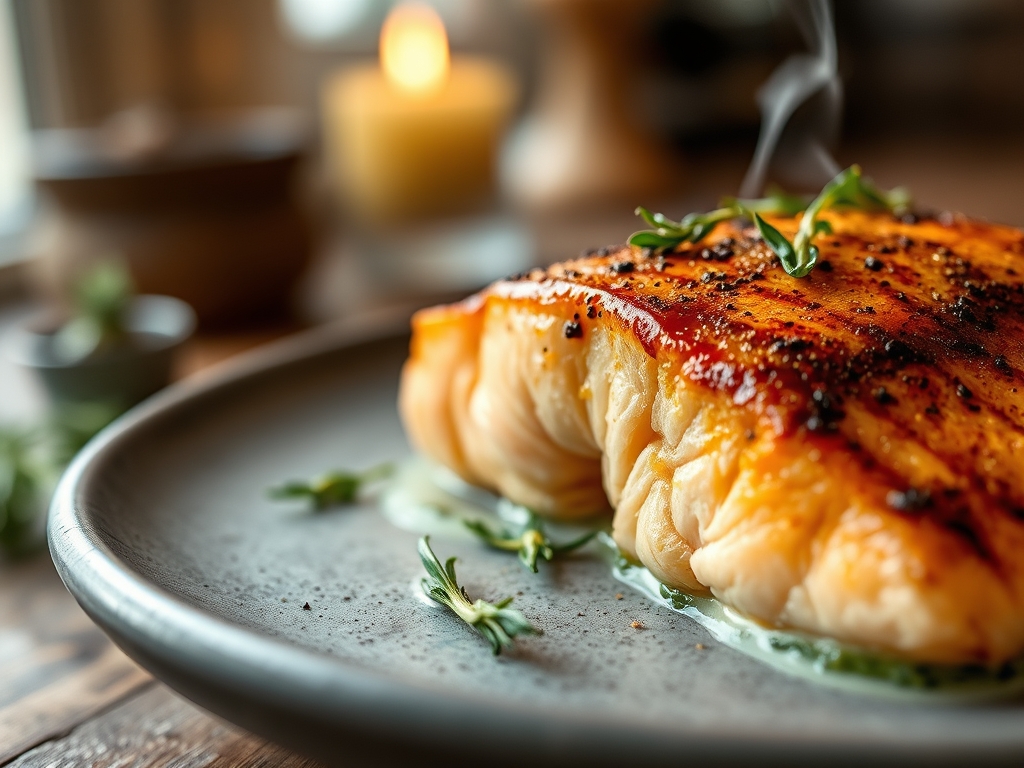
Picture the scene: your kitchen is filled with the sharp, piquant aroma of stone-ground mustard seeds and the sweet, woody scent of caramelizing honey. You are about to master the art of the perfect weeknight centerpiece. When you search for baked dijon salmon recipes, you are looking for that elusive balance of a flaky, buttery interior and a crust that crackles with acidity. This is not just a meal; it is a lesson in chemical harmony where fats and acids collide to create something truly spectacular. We are going to transform a simple filet into a restaurant-quality masterpiece that will have your guests questioning if you have a secret culinary degree.
The beauty of this dish lies in its speed and its sophistication. Salmon is a high-fat protein, which makes it incredibly forgiving, but it requires a specific touch to prevent it from becoming a dry, chalky disappointment. By understanding how the mustard acts as both a flavor agent and a structural barrier, you can lock in moisture while developing a complex crust. We are moving beyond basic seasoning and into the realm of molecular gastronomy, simplified for your home kitchen. Grab your favorite apron and your sharpest knife; we are about to dive deep into the science of the sear and the soul of the sauce.
The Gathers:
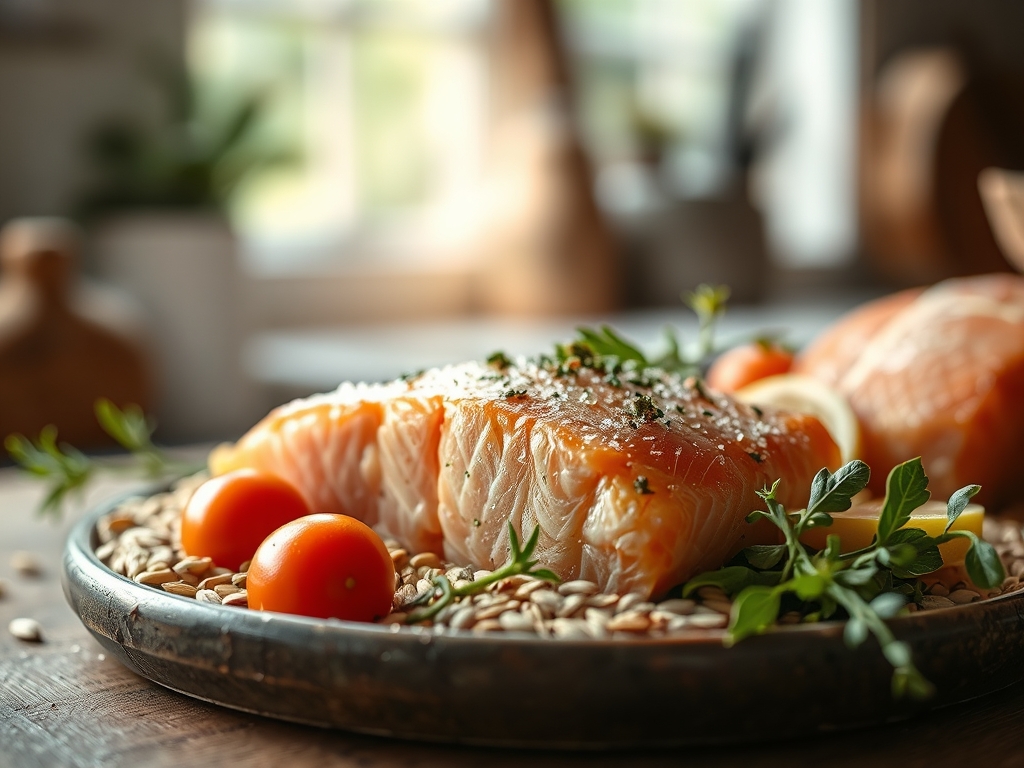
To achieve a professional result, your mise-en-place must be precise. Start with a high-quality center-cut salmon filet, preferably wild-caught for its leaner, more muscular structure. You will need a viscous Dijon mustard; look for one with visible mustard seeds to provide textural contrast. For the sweetness, reach for raw honey or grade A maple syrup to facilitate the Maillard reaction, which is the chemical dance between amino acids and reducing sugars that creates those savory, browned flavors.
Your toolkit is just as important as your ingredients. You will need a microplane to zest fresh lemons without hitting the bitter white pith. A digital scale is your best friend here to ensure the ratio of fat to acid is perfectly balanced. For the aromatics, gather fresh dill and garlic. The garlic should be processed with a bench scraper or a garlic press to release the maximum amount of allicin, the compound responsible for that pungent, spicy kick.
Smart Substitutions:
If you are out of Dijon, a spicy brown mustard can work, though it will lack the refined acidity of the original. For those avoiding honey, an agave nectar provides a similar viscosity. If you find yourself without fresh lemons, a splash of white wine vinegar can provide the necessary brightness, though you will miss the essential oils found in the citrus zest. Always remember that the quality of your fat matters; use a high-smoke point oil like avocado oil or a clarified butter to ensure the bottom of the fish crisps without burning.
The Clock
Efficiency in the kitchen is about "Chef's Flow," which means minimizing movement and maximizing heat management. Your total active prep time should be exactly twelve minutes. This includes the time to pat the fish dry, whisk the glaze in a small saucier, and zest your citrus. While your oven preheats to a steady 400 degrees Fahrenheit, let the salmon sit at room temperature for ten minutes. This reduces the thermal shock when the fish hits the heat, ensuring a more even cook through the center.
The actual bake time ranges from twelve to fifteen minutes depending on the thickness of the filet. However, the clock does not stop when the timer dings. You must account for five minutes of resting time. During this phase, residual heat continues to cook the interior while the muscle fibers relax, allowing the juices to redistribute. If you cut into the fish the second it leaves the oven, those precious juices will end up on your cutting board instead of in your mouth.
The Masterclass
1. The Desiccation Phase
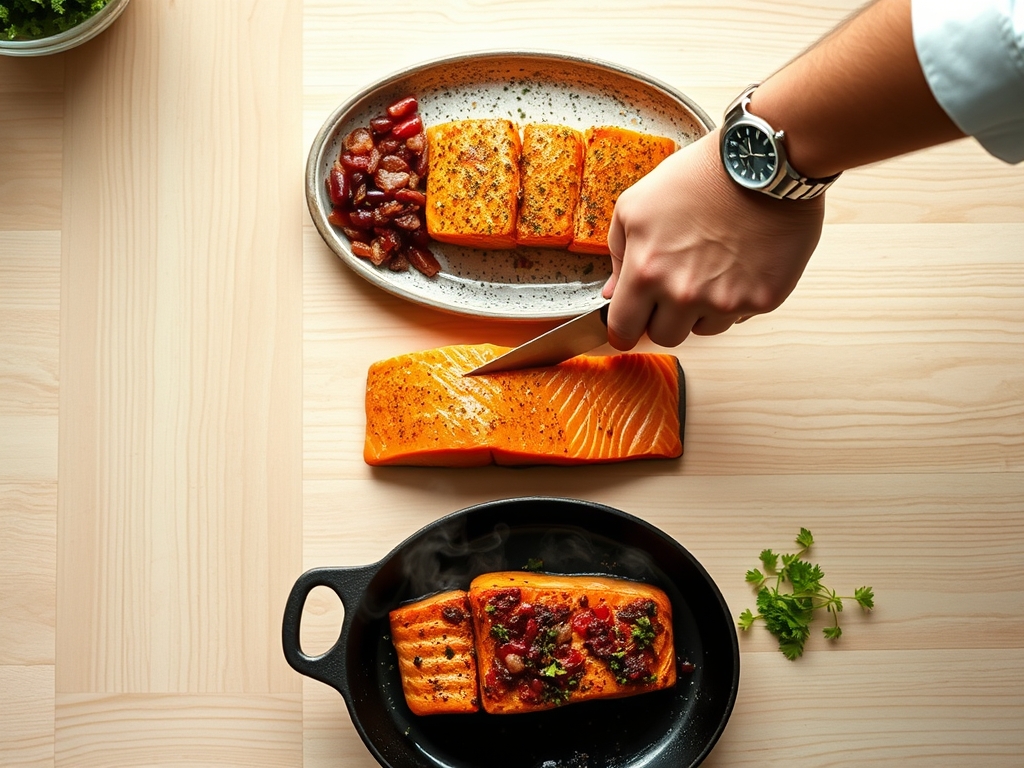
Before any seasoning touches the fish, you must use a paper towel to pat the surface bone-dry. Moisture is the enemy of a good crust. If the surface is damp, the oven's energy will be spent evaporating water rather than browning the protein.
Pro Tip: This is known as preventing "steaming." By removing surface water, you allow the temperature to rise quickly enough to trigger the Maillard reaction, resulting in a golden-brown finish.
2. Emulsifying the Glaze
In your saucier, whisk together the mustard, honey, and oil until the mixture is thick and opaque. You are creating a temporary emulsion. The mustard acts as a stabilizer, holding the oil and honey together so they do not separate and slide off the fish during the bake.
Pro Tip: Emulsification ensures that every square millimeter of the salmon is coated in a uniform layer of flavor, preventing "hot spots" where the honey might burn in isolation.
3. The Zest Infusion
Use your microplane to shower the glaze with lemon zest and grated garlic. Do not just stir them in; fold them gently to keep the aromatic oils suspended in the mustard base. This ensures that the flavor stays on top of the fish rather than sinking to the bottom of the pan.
Pro Tip: Essential oils in citrus zest are volatile. By suspending them in a fat-rich glaze, you "trap" the flavor molecules, preventing them from evaporating in the high heat of the oven.
4. The Precision Application
Apply the glaze using a silicone pastry brush or the back of a spoon. Aim for a thickness of about two millimeters. You want enough to create a crust, but not so much that it becomes a soggy blanket.
Pro Tip: A consistent thickness allows for even heat distribution. If the glaze is too thick in the center, the middle of the fish will be undercooked while the edges overcook.
5. The Thermal Transition
Place the salmon on a parchment-lined baking sheet. The parchment prevents the skin from sticking and makes cleanup a breeze. Slide it into the center rack of the oven to ensure even air circulation around the entire filet.
Pro Tip: Using a heavy-bottomed baking sheet provides better thermal mass, which helps maintain a consistent temperature even when you open the oven door to check for doneness.
6. The Rest and Carryover
Once the internal temperature reaches 130 degrees Fahrenheit on a digital thermometer, remove it from the oven. The temperature will climb to 135 or 140 degrees while it rests on the counter.
Pro Tip: This is called thermal carryover. If you wait until the fish is 145 degrees in the oven, it will end up at 155 degrees by the time you eat it, which is the "danger zone" for dry, flaky fish.
The Deep Dive
From a nutritional standpoint, this dish is a powerhouse. Salmon is famous for its Omega-3 fatty acids, which support heart health and brain function. The mustard adds negligible calories but provides a massive hit of antioxidants. If you are following a Keto lifestyle, simply swap the honey for a monk fruit sweetener or omit it entirely; the mustard and fat will still create a delicious crust. For a vegan alternative, this glaze works beautifully on thick slabs of cauliflower or firm tofu.
The Fix-It:
If your glaze is sliding off, your fish was likely too wet or you added too much oil to the mixture. Fix it by dusting the fish with a tiny bit of cornstarch before glazing next time. If the top is browning too fast, move the tray to a lower rack. If the fish is "leaking" white stuff, that is albumin, a protein that escapes when the fish is cooked too fast or too long. It is harmless, but it means your heat was a bit too aggressive.
For meal prep, the secret to reheating is low and slow. Never use a microwave, which turns salmon into rubber. Instead, place the leftover filet in a covered dish with a tablespoon of water and heat it in a 275-degree oven for eight minutes. This creates a mini-steamer environment that restores the moisture without overcooking the delicate fats.
The Wrap-Up
Mastering baked dijon salmon recipes is a rite of passage for any home cook who values both health and high-end flavor. By focusing on the science of the glaze and the precision of the temperature, you turn a standard Tuesday night dinner into a culinary event. Remember, the kitchen is your laboratory and the ingredients are your elements. Don't be afraid to experiment with different mustard varieties or herb combinations once you have the base technique down. You have the tools, the knowledge, and the "Chef's Flow" to make this happen. Now, go turn that oven on and show that salmon who is boss!
The Kitchen Table
How do I know when the salmon is perfectly done?
Use a digital thermometer to check for an internal temperature of 130 degrees Fahrenheit. The flesh should be opaque and should flake easily when pressed gently with a fork. Always account for five minutes of carryover cooking time.
Can I make this recipe ahead of time?
You can prepare the mustard glaze up to three days in advance and store it in the fridge. However, do not apply the glaze to the fish until right before you are ready to bake to prevent the acid from "cooking" the fish.
What is the best way to prevent the skin from sticking?
Always use parchment paper or a silicone baking mat. If you want crispy skin, ensure the skin side is patted extremely dry and sear it in a heavy-bottomed skillet for two minutes before transferring it to the oven.
Why is my salmon releasing a white substance?
That white substance is albumin, a protein that coagulates and pushes to the surface when salmon is cooked too quickly or at a temperature that is too high. It is perfectly safe to eat but indicates the fish may be slightly overdone.