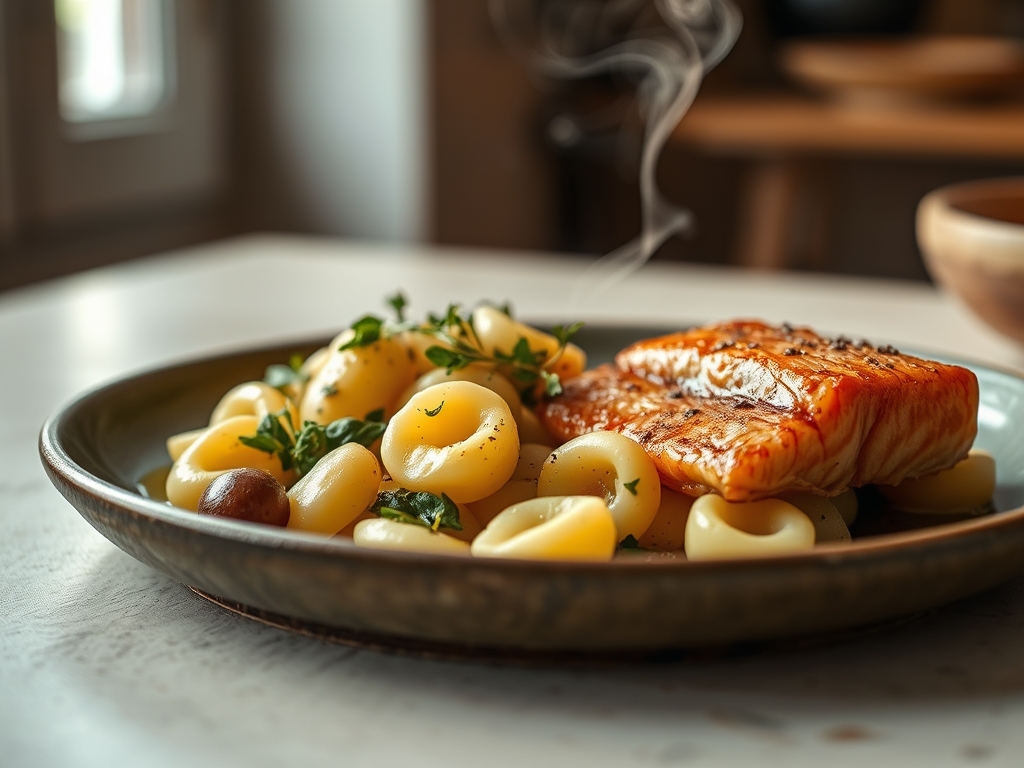
Imagine a skillet where pillows of potato dough meet the buttery, salt-kissed crust of a perfectly seared fillet. Finding the best gnocchi and salmon recipes is like discovering a secret handshake between Italian comfort and Nordic elegance. The air fills with the scent of toasted butter and the piquant bite of fresh lemon zest as the proteins begin to brown.
When you master gnocchi and salmon recipes, you are balancing two distinct textures. You have the soft, aerated crumb of the gnocchi and the flaky, moisture-rich layers of the fish. It is a high-stakes game of heat management. You want the gnocchi to achieve a golden Maillard reaction while keeping the salmon translucent and succulent at its core. This pairing is not just a meal; it is a masterclass in contrast. Whether you are tossing them in a viscous cream sauce or a bright herb oil, the result is always sophisticated yet deeply soul-warming. Let us get your kitchen smelling like a five-star bistro.
The Gathers:
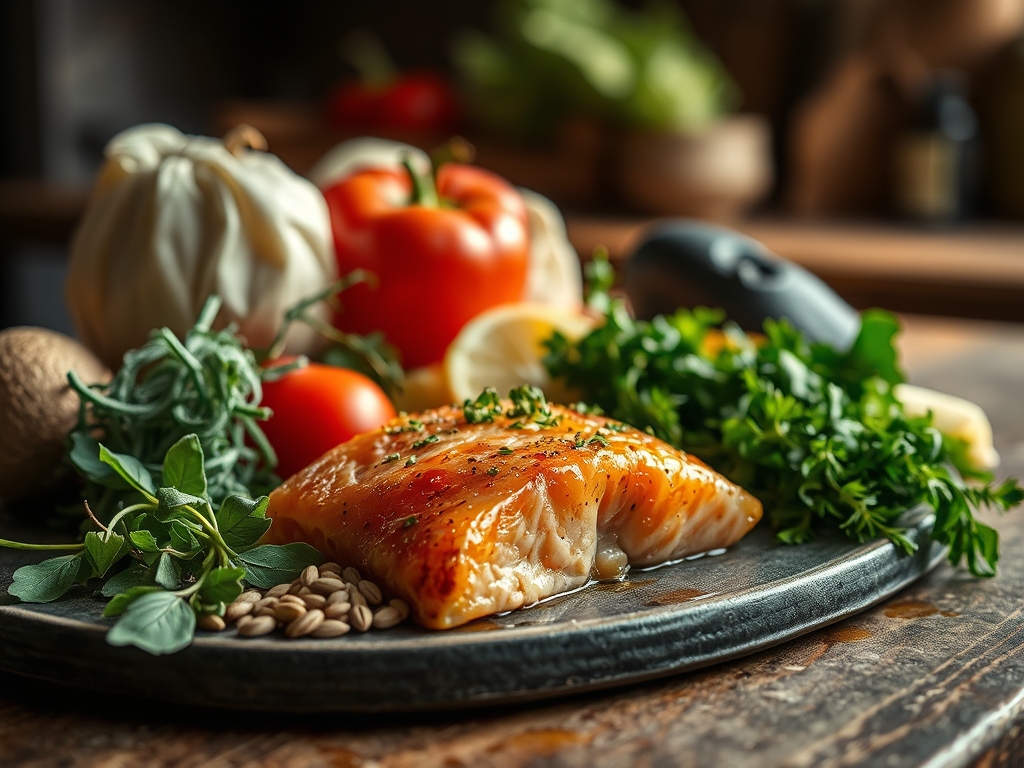
Your mise-en-place is the foundation of culinary success. Start with high-quality Atlantic or Sockeye salmon. Look for vibrant color and firm flesh; this indicates a healthy fat content that will render beautifully in the pan. For the gnocchi, shelf-stable versions work in a pinch, but fresh or frozen potato gnocchi offer a superior, cloud-like density.
You will need a heavy-bottomed skillet (cast iron is king here) to ensure even heat distribution. Gather your aromatics: fresh cloves of garlic, shallots, and a bunch of dill or parsley. For the liquids, keep heavy cream, dry white wine for deglazing, and a high-smoke-point oil like avocado or grapeseed oil within reach. A microplane is essential for showering the dish in citrus zest and hard cheeses like Pecorino Romano.
Smart Substitutions: If you are avoiding nightshades, swap traditional potato gnocchi for cauliflower gnocchi. For a dairy-free version, replace heavy cream with full-fat coconut milk or a cashew-based cream. If fresh salmon is unavailable, high-quality smoked salmon can be folded in at the very end to provide a salty, cured depth without the need for searing.
The Clock
Efficiency in the kitchen is all about the Chef's Flow. This entire meal should take no more than 25 minutes from prep to plate. Spend the first 10 minutes on prep: dicing shallots, mincing garlic, and patting your salmon bone-dry with paper towels. Moisture is the enemy of a good sear.
The cooking phase takes roughly 12 to 15 minutes. You will spend 6 minutes on the salmon to achieve that crispy skin and another 4 to 5 minutes pan-frying the gnocchi. The final few minutes are reserved for the "marriage," where you emulsify your sauce and toss everything together. By synchronizing these elements, you ensure that the gnocchi remains crisp and the salmon stays warm.
The Masterclass
1. Prep the Protein
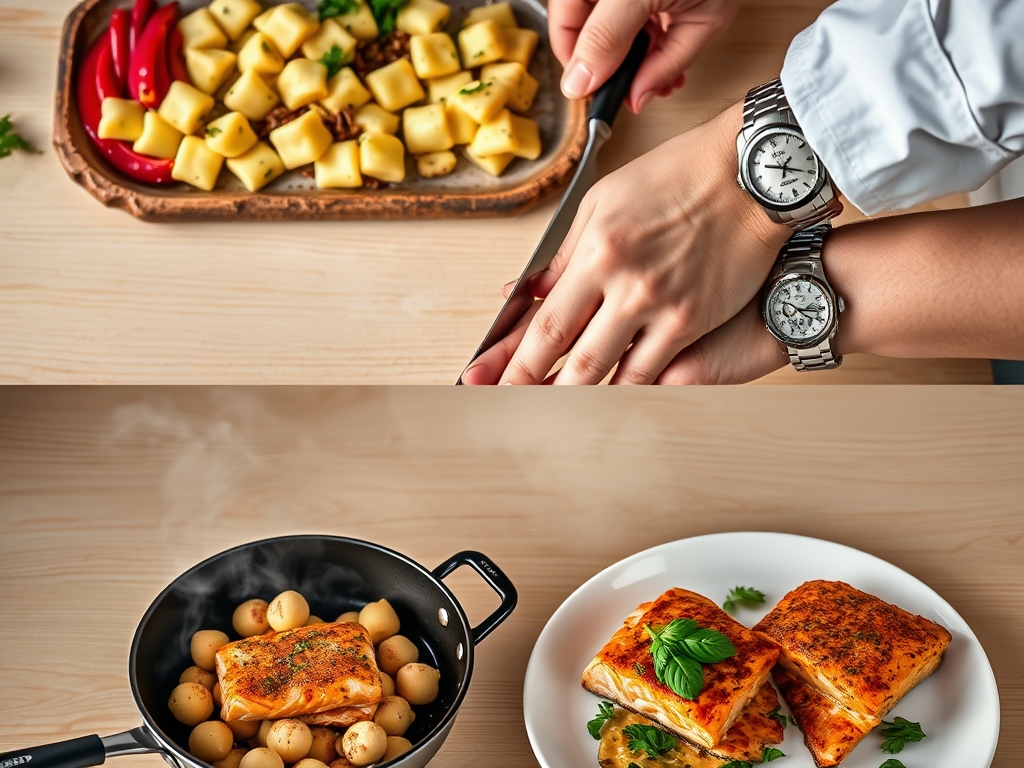
Remove the salmon from the refrigerator 15 minutes before cooking to take the chill off. Use a sharp chef's knife to portion the fillets. Pat the skin side excessively dry.
Pro Tip: This prevents a massive temperature drop when the fish hits the pan. It also encourages enzymatic browning, ensuring the skin becomes a shatteringly crisp cracker rather than a rubbery layer.
2. The Initial Sear
Heat your heavy-bottomed skillet over medium-high heat with a tablespoon of oil. Place the salmon skin-side down and press firmly with a fish spatula for 30 seconds to prevent the protein fibers from curling.
Pro Tip: Pressing the fish ensures maximum surface contact. This facilitates efficient heat transfer through the skin, protecting the delicate flesh above from overcooking.
3. Toast the Gnocchi
While the salmon finishes, use a separate saucier or clear a space in your large skillet. Add a knob of butter and drop in the gnocchi. Do not crowd the pan; they need room to breathe and crisp.
Pro Tip: Pan-frying gnocchi instead of boiling them creates a "crust" that prevents them from becoming mushy when they eventually hit the sauce. This is the Maillard reaction in action, adding nutty flavor notes.
4. Deglaze and Emulsify
Remove the salmon once it reaches an internal temperature of 125 degrees Fahrenheit. Add shallots and garlic to the pan drippings. Pour in a splash of white wine to deglaze, scraping up the brown bits (fond) with a bench scraper or wooden spoon.
Pro Tip: The alcohol in the wine acts as a solvent, releasing flavor molecules that are not water-soluble. This creates a more complex, layered sauce profile.
5. The Final Assembly
Lower the heat and stir in your cream or herb oil. Return the gnocchi to the pan to coat them in the viscous sauce. Flake the salmon into large chunks and gently fold them in.
Pro Tip: Use thermal carryover to your advantage. The salmon will continue to cook about 5 degrees after being removed from the heat. Adding it back at the very end keeps it moist.
The Deep Dive
Macro Nutrition: This pairing is a powerhouse of Omega-3 fatty acids and complex carbohydrates. A standard serving provides roughly 35g of protein, 45g of carbs, and 20g of healthy fats. It is a balanced "recovery meal" that fuels both the brain and the body.
Dietary Swaps: For a Keto twist, use "gnocchi" made from mozzarella and almond flour. For Gluten-Free needs, ensure your gnocchi is labeled GF, as many traditional brands use wheat flour as a binder. Vegan diners can use pan-seared king oyster mushroom "scallops" in place of salmon and a silken tofu base for the cream sauce.
The Fix-It:
- Gummy Gnocchi: This happens if you boil them too long. Fix it by pan-searing them in plenty of butter to "fry" the exterior.
- Broken Sauce: If your cream sauce separates, whisk in a tablespoon of warm pasta water or a splash of heavy cream to re-emulsify the fats.
- Dry Salmon: If you overshot the temperature, flake the fish finely and fold it into a very moist, buttery sauce to mask the dryness.
Meal Prep: To reheat, avoid the microwave. It turns salmon into rubber and gnocchi into stones. Instead, use a small skillet with a teaspoon of water and a lid. The steam will gently infuse moisture back into the starch without overcooking the fish.
The Wrap-Up
There you have it, my friend. You are now equipped to dominate the world of gnocchi and salmon recipes with the precision of a scientist and the soul of an artist. Remember that cooking is all about controlling moisture and heat. Keep your pans hot, your ingredients dry, and your wine chilled. This dish is a guaranteed showstopper that proves you don't need hours to create something truly spectacular. Now, grab those tongs and get searing!
The Kitchen Table
Can I use frozen salmon for these recipes?
Yes, but ensure it is completely thawed and patted dry. Excess moisture from frozen fish prevents the Maillard reaction, leading to steaming rather than searing. Always thaw in the refrigerator overnight for the best texture and food safety.
How do I know when the gnocchi is done?
If boiling, they are done when they float to the surface. If pan-frying, look for a deep golden-brown color and a slight puffiness. The exterior should be crisp while the interior remains soft and pillowy.
What wine pairs best with salmon and gnocchi?
A high-acid white wine like Sauvignon Blanc or a light-bodied Pinot Grigio works beautifully. The acidity cuts through the fatty salmon and creamy sauce, cleansing the palate between bites and highlighting the citrus notes in the dish.
Is it better to leave the skin on the salmon?
Keep the skin on during searing to protect the flesh and add texture. Even if you do not plan to eat it, the skin acts as a thermal buffer, ensuring the fish stays succulent and does not dry out.