
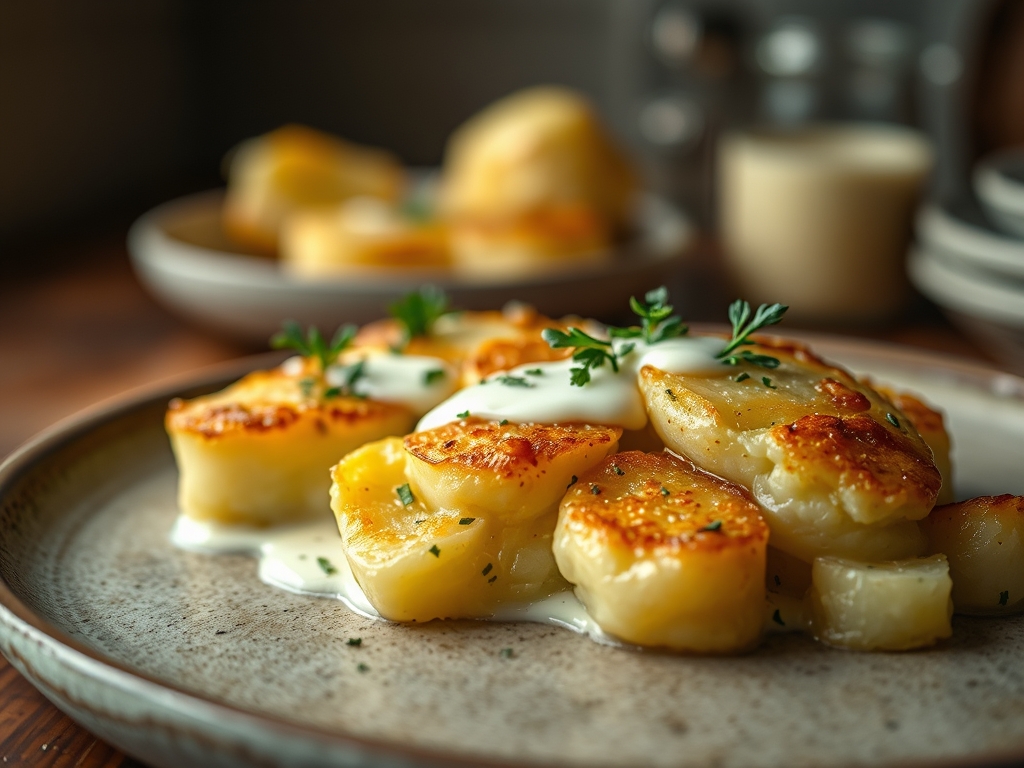
Imagine the sound of a sharp knife slicing through a chilled tuber; the crisp, rhythmic snap of starch under steel. Now, imagine those slices bathing in a pool of silk. Finding the absolute best scalloped potato recipes with heavy cream is like hunting for the perfect velvet dress. It must be structured, luxurious, and utterly timeless. We are moving far beyond the watery, bland casseroles of Sunday school potlucks. We are aiming for a dish where the dairy is thick enough to coat a spoon and the edges are burnished to a deep, nutty gold. This is about the chemistry of comfort.
The secret to why scalloped potato recipes with heavy cream outperform milk based versions lies in the butterfat. High fat content prevents the sauce from curdling when it meets the natural acidity of the potato. When you slide that ceramic dish into the oven, you are not just cooking; you are orchestrating a slow motion infusion of garlic, thyme, and salt into the very cellular structure of the vegetable. The result is a fork tender masterpiece that shatters the line between a simple side dish and a culinary event. Let us get your mise en place ready; it is time to build some serious flavor.
The Gathers:
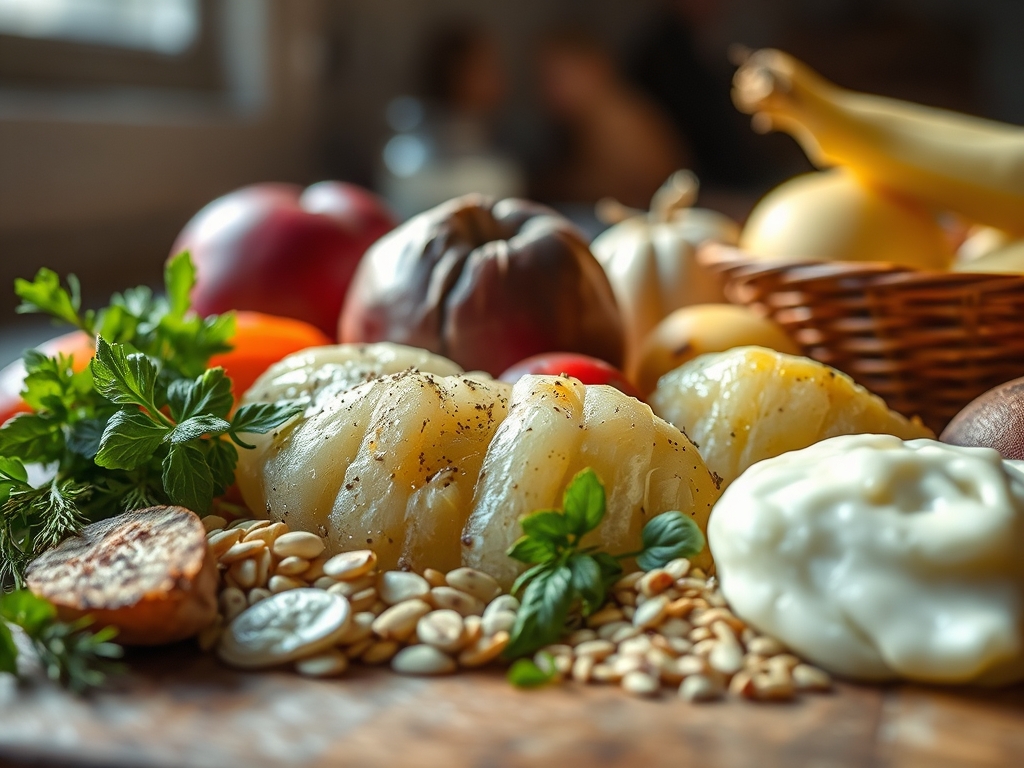
To achieve a professional result, your ingredient selection must be intentional. We start with the Russet potato or the Yukon Gold. The Russet provides high starch levels that act as a natural thickener for our sauce; however, the Yukon Gold offers a waxy, buttery texture that holds its shape beautifully under high heat. You will need a digital scale to ensure you have exactly three pounds of potatoes. Precision is the difference between a sauce that is too loose and one that is perfectly viscous.
Next, we look at the dairy. You need heavy cream with at least 36 percent milkfat. This high fat concentration allows for a stable emulsion that will not break. For aromatics, grab a microplane to zest fresh nutmeg and finely grate three cloves of garlic. Nutmeg contains myristicin, which adds a warm, woody depth that cuts through the richness of the cream. You will also need Gruyere or sharp white cheddar for a piquant finish.
Smart Substitutions:
If you need to pivot, you can swap heavy cream for a mixture of full fat coconut milk and a tablespoon of cornstarch for a dairy free alternative. If you lack Gruyere, a high quality Fontina or even a sharp Parmesan will provide that essential salty kick. For a lighter profile, replace one third of the cream with a high quality bone broth to add umami without the extra weight.
The Clock:
Prep Time: 25 Minutes
Cook Time: 60 to 75 Minutes
Resting Time: 15 Minutes
The "Chef's Flow" is all about overlapping tasks to maximize efficiency. While your oven preheats to 375 degrees Fahrenheit, you should be using a mandoline slicer to achieve uniform 1/8 inch rounds. Consistency in thickness ensures that every slice reaches the same level of gelatinization at the same time. While the potatoes soak in cold water to remove excess surface starch, use a heavy-bottomed skillet or a saucier to infuse your cream with herbs. By the time the oven chime rings, your components should be ready for assembly. Never rush the rest period; this allows the starches to reabsorb the liquid, ensuring the dish does not "weep" when sliced.
The Masterclass:
1. The Precision Slice
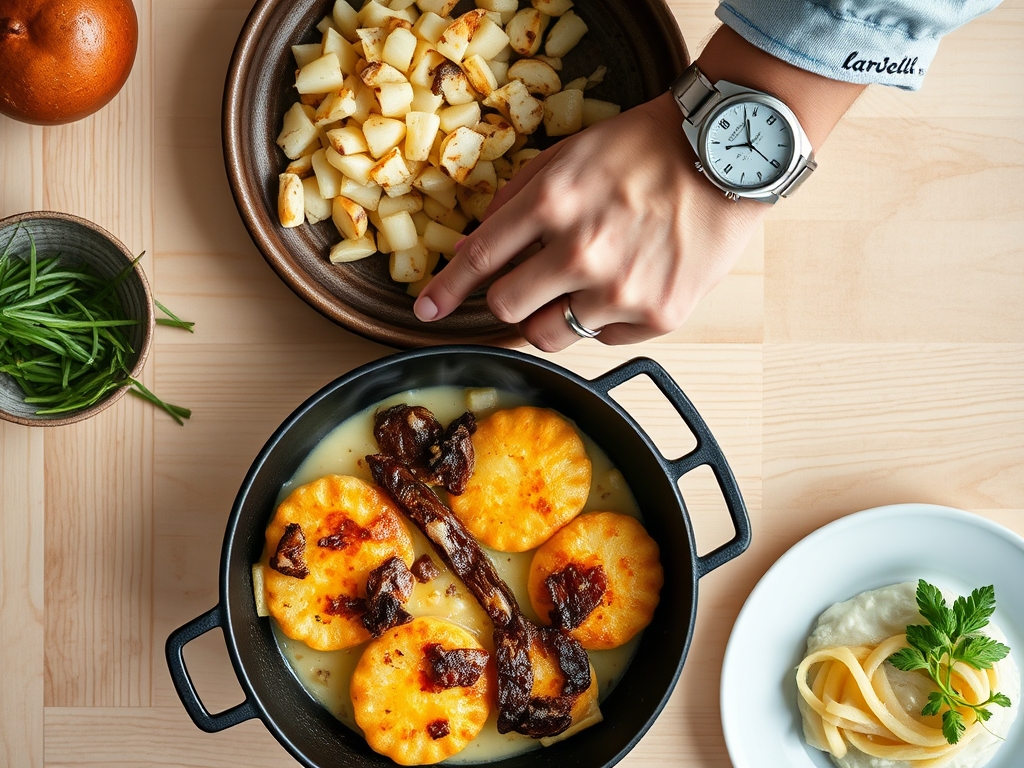
Using a mandoline or a very sharp chef knife, slice your peeled potatoes into uniform rounds. Aim for the thickness of a coin. Note the texture in the step-by-step photos below; they should be translucent at the edges.
Pro Tip: Uniformity is not just for aesthetics. It prevents "hot spots" where thinner slices turn to mush while thicker ones remain crunchy. This is known as thermal equilibrium.
2. The Cream Infusion
In a saucier, combine your heavy cream, smashed garlic, thyme sprigs, and salt. Heat over medium until tiny bubbles form around the edges. Do not let it reach a rolling boil.
Pro Tip: This process uses steeping to extract fat soluble flavor compounds from the herbs. Heating the cream also jumpstarts the cooking process, reducing total oven time.
3. The Shingling Technique
Grease a 9×13 baking dish with cold butter. Arrange the potato slices in overlapping rows. This "shingling" creates pockets for the cream to settle while allowing the tops to remain exposed for browning.
Pro Tip: Shingling increases the surface area exposed to dry heat, which facilitates the Maillard reaction, the chemical reaction between amino acids and reducing sugars that gives the dish its golden crust.
4. The Pour and Press
Pour the warm, strained cream mixture over the potatoes. Use a bench scraper or a large spoon to gently press down on the potatoes, ensuring the liquid permeates every layer.
Pro Tip: Pressing the layers removes air pockets. Air is a poor conductor of heat; removing it ensures the potatoes cook via conduction from the hot cream rather than uneven steam.
5. The First Bake
Cover the dish tightly with foil. This traps steam, which hydrates the potato starches and softens the cellulose. Bake for 40 minutes.
Pro Tip: This stage is about hydrolysis. The steam breaks down the complex carbohydrates, making the potatoes tender before the browning stage begins.
6. The Cheese Reveal
Remove the foil and sprinkle your grated cheese across the top. Return to the oven uncovered for another 20 to 30 minutes.
Pro Tip: Removing the foil shifts the cooking method to convection. The dry air evaporates surface moisture, allowing the cheese to render its fat and form a crispy "frico" crust.
7. The Resting Phase
Remove the dish from the oven when the center is bubbling and the top is mahogany. Let it sit on a cooling rack for at least 15 minutes before serving.
Pro Tip: This utilizes thermal carryover. The internal temperature will continue to rise slightly, while the starches set into a stable, sliceable matrix as they cool.
The Deep Dive:
Macro Nutrition:
A standard serving of scalloped potatoes with heavy cream is calorie dense, providing approximately 350 to 450 calories. It is high in potassium from the potatoes and calcium from the dairy. The fat content is significant, which provides high satiety levels.
Dietary Swaps:
- Vegan: Use cashew cream (soaked cashews blended with water) and nutritional yeast for a cheesy flavor.
- Keto: Replace potatoes with sliced daikon radish or cauliflower florets. The heavy cream fits perfectly within keto macros.
- Gluten Free: This recipe is naturally gluten free, as we rely on potato starch rather than a flour based roux for thickening.
The Fix-It:
- Problem: The sauce is curdled. This usually happens if you use low fat milk or add too much acid. The Fix: Whisk a teaspoon of cornstarch into a tablespoon of cold cream and gently stir it into the bubbling sauce to re-emulsify.
- Problem: Potatoes are still hard. This means the slices were too thick or the dish wasn't covered tightly enough. The Fix: Add a splash of hot broth, cover tightly with foil, and increase the oven temp by 25 degrees for 15 minutes.
- Problem: The top is burning but the middle is raw. The Fix: Tent the dish with foil to block direct radiant heat and move the rack to a lower position in the oven.
Meal Prep & Reheating:
To maintain "day-one" quality, reheat leftovers in a 325 degree oven rather than a microwave. Microwaves vibrate water molecules too violently, which can cause the fat to separate from the cream. Adding a tablespoon of water or cream before reheating helps rehydrate the starches.
The Wrap-Up:
Mastering scalloped potato recipes with heavy cream is a rite of passage for any serious home cook. It is a dish that demands patience, precision, and a total lack of fear regarding butterfat. When you pull that bubbling, golden tray out of the oven, you aren't just looking at a side dish; you are looking at the result of perfect molecular cooperation. The starch has thickened the cream, the garlic has infused the fat, and the heat has transformed humble tubers into something ethereal. Go ahead, grab your tongs and serve up a generous portion. You have earned every decadent bite.
The Kitchen Table:
Why do my scalloped potatoes stay hard?
This usually occurs if the potato slices are too thick or if the oven temperature is too high, causing the liquid to evaporate before the starch granules can fully gelatinize and soften the vegetable's cellular structure.
Do I have to peel the potatoes?
While peeling provides a more refined, silky texture, leaving the skins on Yukon Golds adds a rustic look and extra fiber. However, for traditional scalloped potato recipes with heavy cream, peeling is preferred for a better mouthfeel.
Can I make this dish ahead of time?
Yes. You can bake the dish fully, refrigerate it, and then reheat it. The flavors often deepen overnight. Just ensure you cover it tightly to prevent the potatoes from oxidizing and turning grey.
What is the best cheese for scalloped potatoes?
Gruyere is the gold standard because it melts beautifully and has a high oil content that resists breaking. A mix of sharp white cheddar and Parmesan also provides a complex, salty profile.