
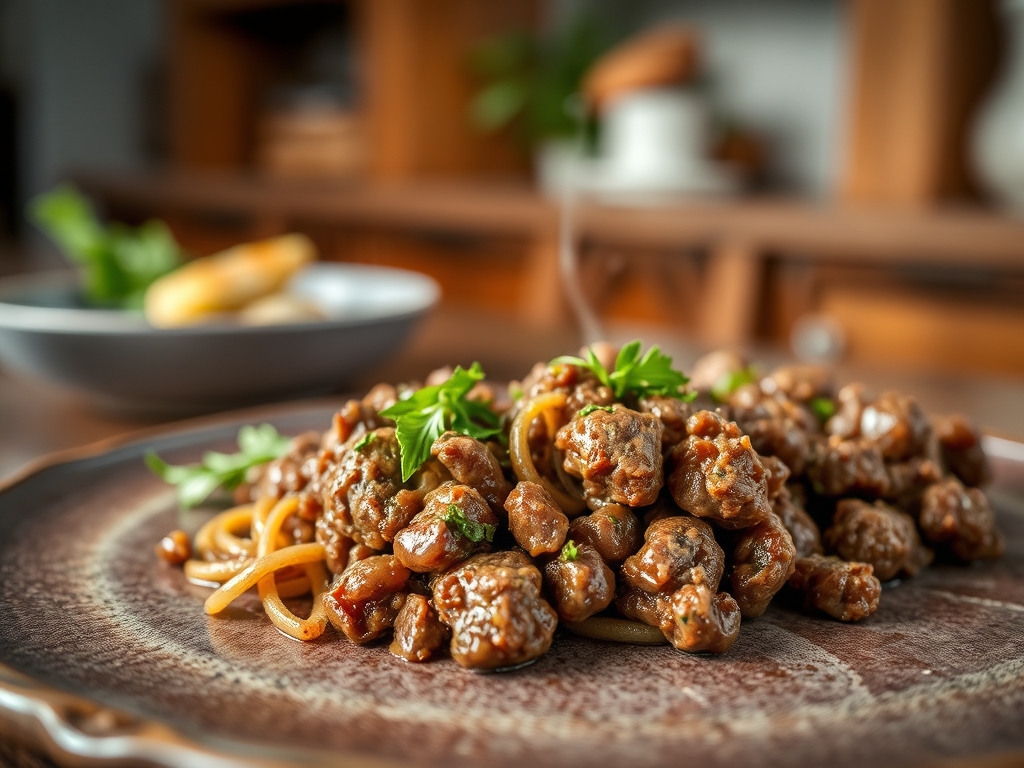
Picture the sizzle as cold protein hits a screaming hot cast iron surface; that immediate, intoxicating aroma is the Maillard reaction in full swing. We are moving far beyond basic burgers to explore sophisticated, whole ground beef recipes that transform humble mince into culinary gold. This is about mastering texture, fat ratios, and the chemical alchemy of a perfectly rendered sear.
The beauty of working with ground beef lies in its surface area. Because the meat is finely aerated during the grinding process, it offers a massive landscape for browning and flavor infusion. Whether you are craving a silky Bolognese or a piquant Middle Eastern kofta, these techniques ensure your protein remains succulent rather than sandy. We are going to treat this ingredient with the same reverence as a prime ribeye, focusing on moisture retention and the delicate balance of acidity to cut through the rich, beefy lipids.
The Gathers:
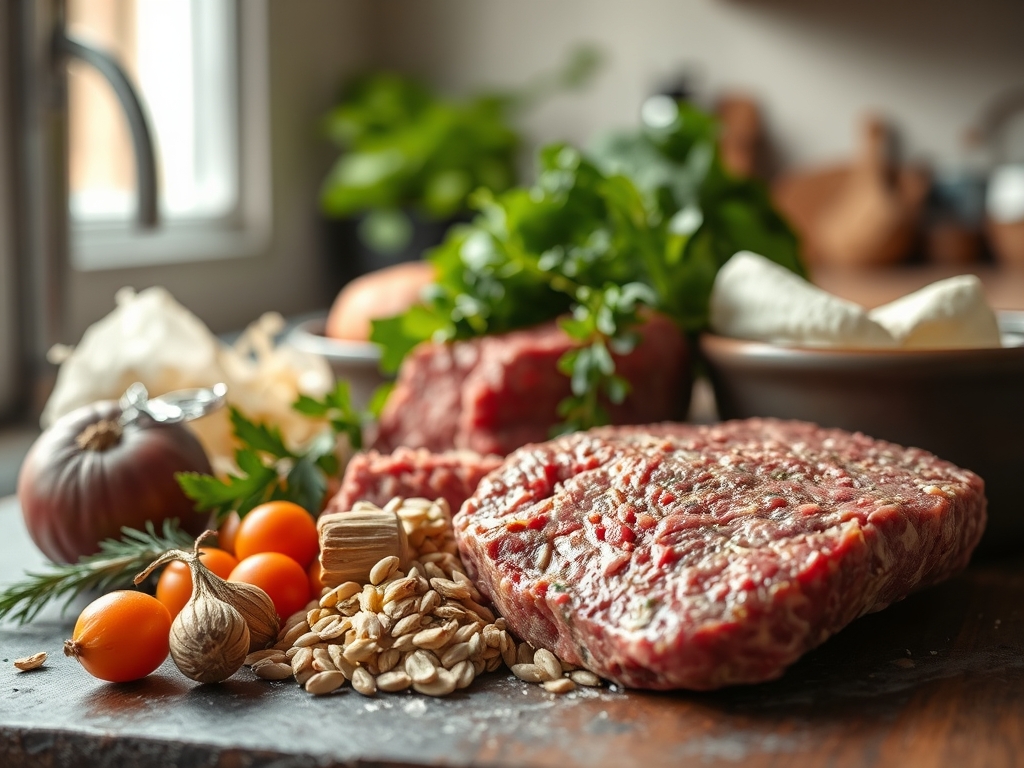
To execute these whole ground beef recipes with precision, your mise-en-place must be impeccable. Start with high-quality beef, ideally an 80/20 lean-to-fat ratio. This specific ratio is non-negotiable for flavor; the fat provides the viscous mouthfeel and carries the fat-soluble aromatics of your spices. You will need a heavy-bottomed skillet or a copper-core saucier to ensure even heat distribution and prevent localized scorching.
Gather your aromatics: yellow onions for their high sugar content (perfect for caramelization), fresh garlic cloves ready for the microplane, and bright herbs like flat-leaf parsley or rosemary. For acidity, keep a bottle of dry red wine or high-quality balsamic vinegar nearby to deglaze the pan. Do not forget the binder for dishes like meatballs or meatloaf; panko breadcrumbs or soaked sourdough provide a structural matrix that traps juices.
Smart Substitutions:
If you are looking to lighten the profile, you can swap 25 percent of the beef for finely minced cremini mushrooms. This is known as "The Blend." The mushrooms mimic the texture of the meat while adding a massive boost of umami through glutamic acid. If you lack red wine for deglazing, a splash of beef bone broth with a teaspoon of Worcestershire sauce provides a similar depth of savory complexity.
The Clock:
Efficiency in the kitchen is about understanding the "Chef's Flow." For most whole ground beef recipes, you are looking at a 15-minute preparation window and a 20 to 30-minute active cook time. The prep involves the mechanical breakdown of vegetables and the weighing of ingredients on a digital scale for consistency.
The flow begins with tempering your meat; let it sit at room temperature for 20 minutes. Cold meat drops the pan temperature instantly, leading to steaming instead of searing. While the meat tempers, use your bench scraper to organize your chopped aromatics. The cooking phase is a sequence: render the fat, brown the protein, infuse the aromatics, and finally, emulsify the sauce. Always account for a 5-minute resting period for denser items like meatloaf to allow the internal juices to redistribute.
The Masterclass:
1. The High-Heat Sear
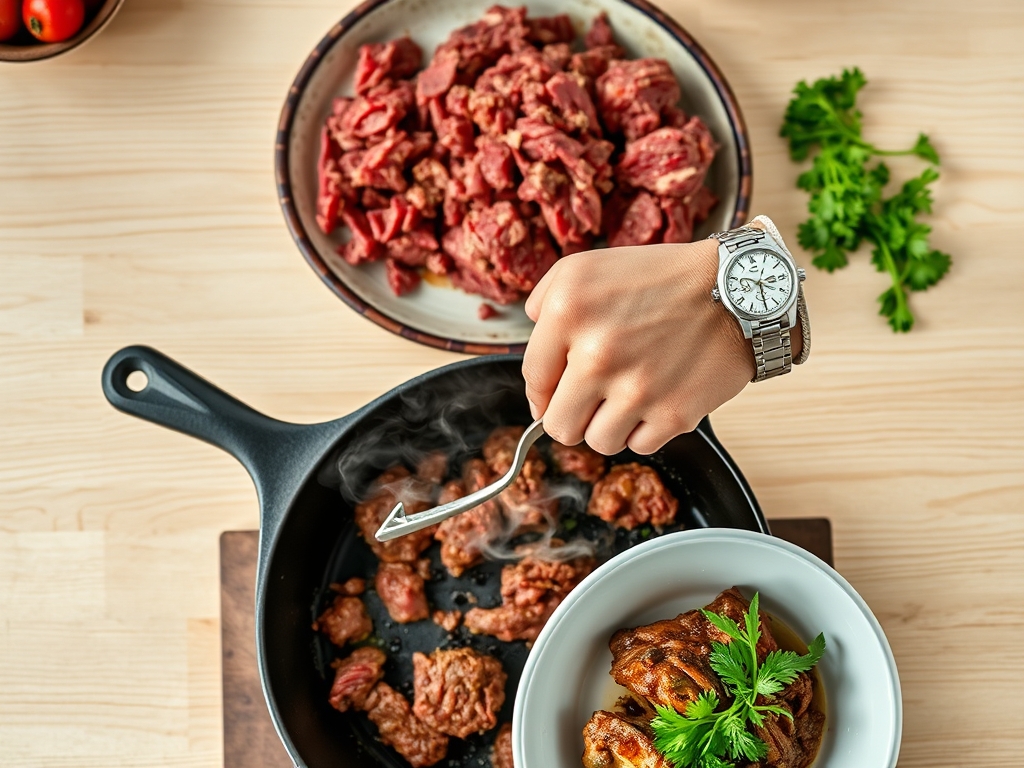
Place your heavy-bottomed skillet over medium-high heat until a drop of water flicked onto the surface dances and evaporates instantly. Add the beef in a single, flat layer. Do not stir it immediately. Let it sit undisturbed for three minutes to develop a deep, mahogany crust.
Pro Tip: This is the Maillard reaction. By leaving the meat undisturbed, you allow the amino acids and reducing sugars to reorganize into hundreds of different flavor compounds. Stirring too early causes the meat to release moisture, which then boils the beef rather than searing it.
2. Deglazing and Fond Recovery
Once the meat is browned and removed, you will see dark bits stuck to the bottom of the pan. This is called "fond." Pour in your liquid of choice (wine, stock, or verjuice) and use a wooden spoon to scrape those bits back into the sauce.
Pro Tip: Deglazing is a chemical extraction. The alcohol or acid in your liquid dissolves the caramelized proteins, integrating that concentrated "beefy" essence back into your dish. This creates a more cohesive and complex flavor profile.
3. The Low and Slow Simmer
For sauces and stews, reduce the heat to a bare simmer. This is where collagen, if present in the grind, begins to break down into gelatin, giving your sauce a luxurious, lip-smacking texture.
Pro Tip: Simmering prevents the proteins from tightening and becoming rubbery. High heat causes muscle fibers to contract violently, squeezing out moisture. A gentle bubble ensures the beef remains tender through a process called enzymatic tenderization.
4. Emulsifying the Fat
If your sauce looks broken or oily, use a whisk to vigorously incorporate a cold knob of butter or a splash of starchy pasta water. This creates a stable emulsion between the rendered beef fat and the aqueous sauce.
Pro Tip: Emulsification is the process of joining two liquids that usually do not mix. The starch or milk solids act as a bridge, surrounding fat droplets and suspending them evenly for a silky finish.
5. Aerating the Mixture
When making meatballs or burgers, use your hands or a fork to gently combine ingredients. Never overwork the meat or pack it too tightly.
Pro Tip: Overworking the meat develops myosin, a protein that creates a tough, springy texture similar to a hot dog. Keeping the mixture loose preserves "micro-pockets" that catch and hold rendered fat during the cooking process.
6. Thermal Carryover Management
Remove your beef from the heat source when it is about 5 degrees Fahrenheit below your target internal temperature. Use a digital thermometer for absolute precision.
Pro Tip: This is thermal carryover. The residual heat on the surface of the meat continues to travel toward the center even after the heat source is removed. Ignoring this leads to dry, overcooked results.
7. The Final Infusion
Add fresh, delicate herbs like basil or chives only in the final 60 seconds of cooking.
Pro Tip: Volatile aromatic oils in fresh herbs are highly heat-sensitive. Adding them too early causes the flavors to evaporate into the air rather than staying in your food. Adding them at the end ensures a bright, piquant finish.
The Deep Dive:
Ground beef is a nutritional powerhouse, offering high bioavailability of Vitamin B12, Zinc, and Selenium. A standard 4-ounce serving of 80/20 beef contains approximately 20 grams of protein and 20 grams of fat. For those on a Keto path, this is a perfect macro-ratio. If you are leaning toward a Mediterranean approach, draining the excess fat and replacing it with heart-healthy olive oil is a smart pivot.
Dietary Swaps:
- Vegan: Use a pea-protein based crumble and add a teaspoon of liquid smoke to mimic the charred beef profile.
- Keto: Replace traditional breadcrumb binders with crushed pork rinds or almond flour.
- Gluten-Free: Ensure your Worcestershire sauce is certified GF and use tamari instead of soy sauce for deglazing.
The Fix-It:
- Gray Meat: If your meat looks gray, your pan was too crowded. Fix it by removing half the meat and cranking the heat to "flash-sear" the remaining portion.
- Too Salty: If you over-seasoned, add a splash of heavy cream or a peeled potato to the sauce to absorb excess sodium.
- Greasy Sauce: If the fat is overwhelming, use a bread crust to skim the surface or toss in a few ice cubes; the fat will cling to the cold cubes for easy removal.
Meal Prep Science:
When reheating whole ground beef recipes, avoid the microwave if possible. The microwave agitates water molecules, which can steam the meat from the inside out, making it tough. Instead, reheat in a skillet with a tablespoon of water or broth. Cover with a lid to create a gentle steam environment that rehydrates the protein fibers.
The Wrap-Up:
Mastering ground beef is about respecting the science of the sear and the patience of the simmer. You now have the technical toolkit to turn a basic grocery staple into a gourmet experience. Remember: watch your temperatures, don't crowd the pan, and always deglaze that beautiful fond. Your kitchen is your laboratory; go make something delicious!
The Kitchen Table:
How do I prevent ground beef from becoming dry?
Avoid over-mixing the raw meat and ensure you use at least a 15 to 20 percent fat ratio. Use a digital thermometer to pull the meat off the heat at 160 degrees Fahrenheit to prevent moisture loss.
Can I cook ground beef directly from frozen?
It is not recommended for high-quality results. Frozen beef releases excess moisture as it thaws in the pan, which steams the meat instead of browning it. For the best Maillard reaction, thaw completely and pat dry before cooking.
What is the best way to drain grease safely?
Never pour hot grease down the drain. Instead, use tongs to push the meat to one side and soak up the rendered fat with a wadded paper towel, or drain it into a heat-safe glass jar for disposal.
Why does my ground beef sometimes smell like sulfur?
If the meat is within its use-by date, a slight odor can be due to gases trapped in vacuum packaging. However, if the smell is pungent or the texture is slimy, the meat has spoiled and must be discarded.