
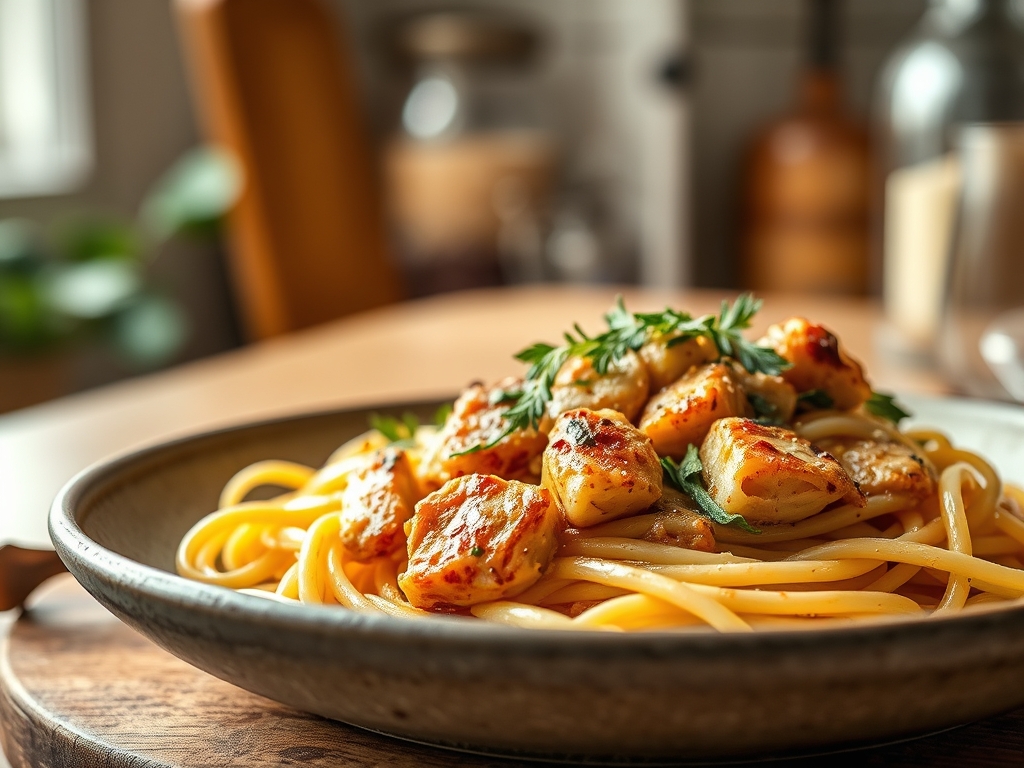
Picture the scene: a cast iron skillet sizzling with golden fat while a pot of salted water roars at a rolling boil. We are not just making dinner; we are orchestrating a symphony of amino acids and starches. Mastering italian pasta with chicken recipes requires more than a grocery list. It demands an understanding of how proteins interact with complex carbohydrates to create that perfect, velvety mouthfeel.
I know what you are thinking. Chicken in pasta is a polarizing topic for purists in Rome, but when executed with technical precision, it becomes the ultimate comfort canvas. We are talking about succulent, pan-seared poultry meeting the al dente bite of bronze-cut semolina. This is about more than just calories; it is about the Maillard reaction meeting the emulsification of pasta water. Grab your apron and a glass of crisp Pinot Grigio. We are going deep into the chemistry of the kitchen to elevate your weeknight rotation into a five-star experience.
The Gathers:
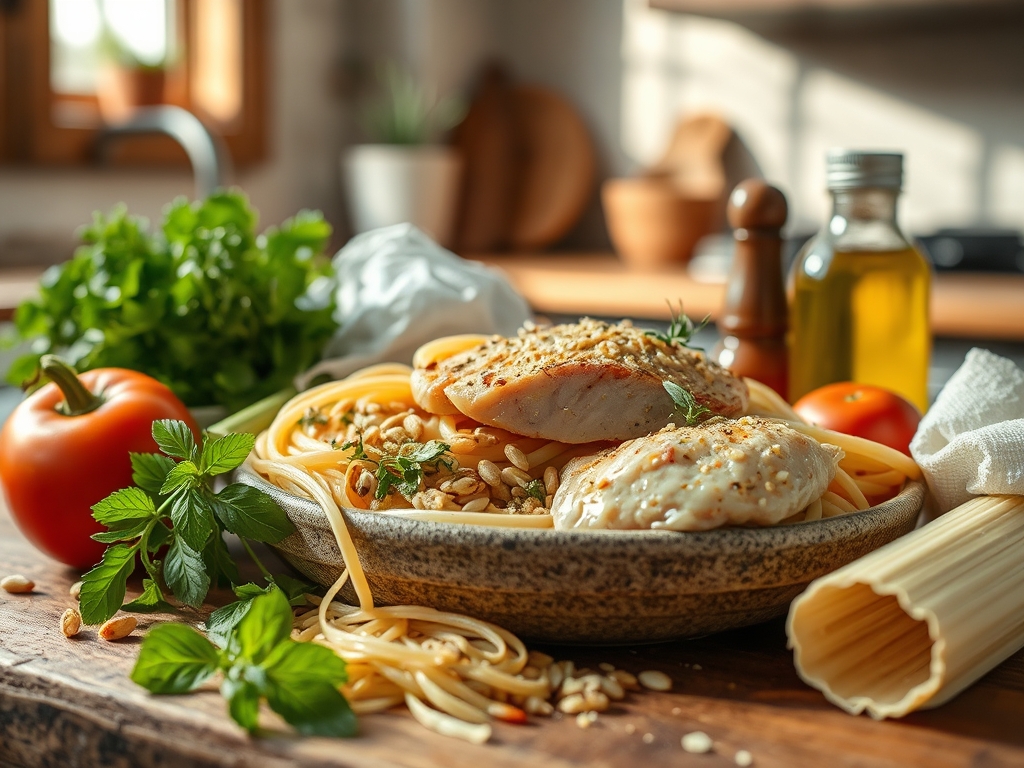
As you can see in the ingredient spread above, our mise-en-place is a tactical lineup of flavor precursors. For the protein, we utilize 500 grams of boneless, skinless chicken breast or thighs. The thighs offer a higher lipid content (about 9 grams of fat per 100 grams), which ensures the meat remains succulent even under high heat. Our pasta choice is 400 grams of bronze-die extruded pasta. This specific manufacturing process leaves the surface of the noodle microscopic and jagged, which is essential for the mechanical adhesion of the sauce.
The aromatic base consists of 50 grams of finely minced shallots and 15 grams of crushed garlic. We also require 100 milliliters of dry white wine for deglazing; look for a bottle with high acidity to cut through the richness. For the fats, we use 30 milliliters of extra virgin olive oil with a low acidity level (less than 0.8 percent) and 30 grams of unsalted European-style butter, which contains a higher butterfat percentage (82 percent) than standard varieties.
Smart Substitutions:
If you are avoiding alcohol, substitute the wine with 100 milliliters of chicken bone broth spiked with 5 milliliters of lemon juice to mimic the tartness. For a lighter profile, swap the heavy cream for a silken tofu puree or a cashew-based cream. These provide the same viscous texture through plant-based proteins and fats without the lactose.
The Clock:
The "Chef's Flow" is all about overlapping tasks to minimize downtime.
- Prep Time: 15 minutes. This involves the precision dicing of aromatics and the cubing of chicken into uniform 2-centimeter pieces.
- Cook Time: 20 minutes. This accounts for the 8 to 10 minutes of boiling time and the 10 minutes of active pan work.
- Total Time: 35 minutes.
The secret to efficiency is starting your water pot first. It takes approximately 10 minutes for 4 liters of water to reach 100 degrees Celsius on a standard induction burner. While the water heats, you execute your knife work. By the time the pasta hits the water, your chicken should already be searing.
The Masterclass:
1. The Sear and Render
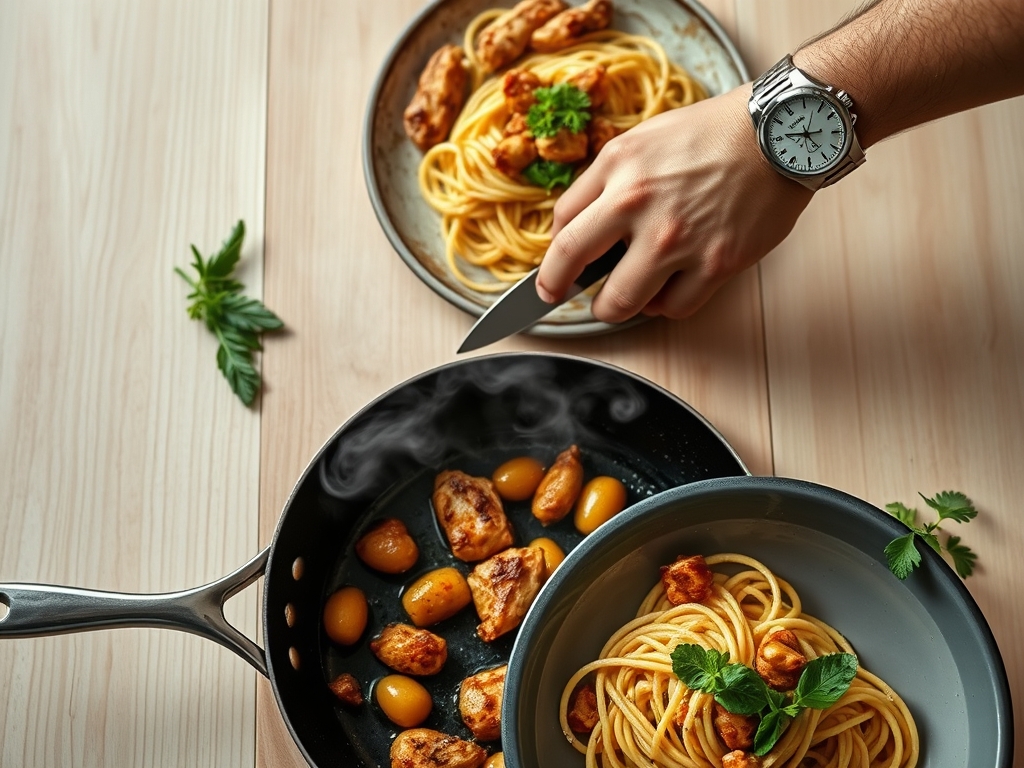
Season your chicken with 5 grams of kosher salt and 2 grams of black pepper. Heat your oil in a wide skillet until it reaches the shimmer point (approximately 190 degrees Celsius). Add the chicken in a single layer.
Pro Tip: Do not crowd the pan or move the meat for the first three minutes.
Why it Works: This allows the Maillard reaction to occur. This chemical reaction between amino acids and reducing sugars creates hundreds of different flavor compounds and that characteristic brown crust.
2. The Pasta Plunge
Add 20 grams of salt to your boiling water. It should taste like the sea. Drop your pasta and set a timer for 2 minutes less than the package instructions.
Pro Tip: Never add oil to your pasta water.
Why it Works: Oil creates a hydrophobic barrier on the noodle surface. This prevents the sauce from penetrating the starch layer, causing it to slide off the pasta and pool at the bottom of the bowl.
3. The Aromatic Infusion
Remove the chicken from the pan once it hits an internal temperature of 74 degrees Celsius. In the remaining fat, add your shallots and garlic. Sauté until translucent.
Pro Tip: Add a pinch of baking soda to the onions.
Why it Works: A tiny amount of an alkaline substance speeds up the breakdown of pectin and accelerates browning, intensifying the sweetness of the aromatics in half the time.
4. The Deglaze and Emulsify
Pour in your wine or broth. Use a wooden spatula to scrape the fond (the brown bits) from the bottom of the pan. Add 120 milliliters of starchy pasta water.
Pro Tip: Use the water from the last 2 minutes of the pasta's boil.
Why it Works: This water is saturated with amylopectin starch. When swirled with fat, it acts as a natural emulsifier, binding the oil and liquids into a creamy, cohesive sauce.
5. The Final Marriage
Toss the undercooked pasta and the chicken back into the skillet. Add your butter and a handful of Parmigiano-Reggiano. Toss vigorously over medium heat.
Pro Tip: Finish with a "mantecatura" (vigorous shaking or stirring).
Why it Works: The mechanical agitation incorporates air and helps the fats and starches create a stable emulsion, resulting in a glossy, restaurant-quality finish.
The Deep Dive:
Macro Nutrition
A standard serving of this dish provides approximately 550 calories. You are looking at 35 grams of protein for muscle repair, 60 grams of complex carbohydrates for sustained energy, and 18 grams of fats. By using chicken breast, you keep the saturated fat levels lower while maximizing the satiety index.
Dietary Swaps
- Keto: Replace the pasta with zoodles or shirataki noodles. Increase the fat content by adding 50 grams of heavy cream to the sauce.
- Gluten-Free: Use pasta made from brown rice or chickpeas. Note that chickpea pasta releases more foam during boiling due to higher protein content; monitor the pot closely.
- Vegan: Use "chick'n" strips and nutritional yeast instead of cheese. The nutritional yeast provides a similar umami profile and a boost of B12.
The Fix-It: Common Pitfalls
- Rubbery Chicken: This happens when the meat is boiled in the sauce rather than seared. Fix it by ensuring the pan is searing hot before the meat touches it.
- Broken Sauce: If the sauce looks oily and separated, it has lost its emulsion. Fix it by adding two tablespoons of hot pasta water and whisking vigorously off the heat.
- Bland Flavor: Usually a lack of acidity. Fix it with a squeeze of fresh lemon juice or a splash of balsamic vinegar at the very end to brighten the heavy fats.
Meal Prep: Reheating Science
When reheating, the starch in the pasta undergoes retrogradation, becoming firm and dry. To restore the texture, add 15 milliliters of water or milk before microwaving. Heat in 30-second intervals to avoid "popping" the fats, which ruins the emulsion.
The Wrap-Up:
You have just leveled up from a home cook to a kitchen scientist. Understanding the interplay of starch, fat, and heat is the key to mastering italian pasta with chicken recipes. Whether you are hosting a dinner party or just fueling up for a busy week, these techniques ensure every bite is a perfect balance of texture and taste. Now, go forth and emulsify with confidence!
The Kitchen Table:
Which pasta shape is best for chicken?
Short, tubular shapes like Penne or Rigatoni are ideal. Their hollow centers trap the sauce and small pieces of chicken, ensuring a balanced ratio in every forkful.
Can I use frozen chicken?
Yes, but it must be fully thawed and patted dry with paper towels. Excess moisture on the surface of the meat will cause it to steam rather than sear, preventing the Maillard reaction.
Why does my garlic taste bitter?
Garlic burns at a lower temperature than onions. If you add it too early or the pan is too hot, it undergoes a chemical change that creates a piquant, acrid flavor. Always add garlic during the last 60 seconds of sautéing aromatics.
How long does this keep in the fridge?
Stored in an airtight container at 4 degrees Celsius, this dish remains safe and delicious for up to three days. Just remember the reheating tip to keep it from drying out!